
Several NATO members have recently made decisions on new rocket artillery systems. For example, the Swedish government last week approved the procurement of the American M142 HIMARS, valued at about seven billion kronor (roughly 620 million euros). While the number of systems was not disclosed, the U.S. State Department had already approved Sweden’s request in March for 20 rocket launchers along with ammunition and additional equipment. Delivery is slated to begin next year.
Additionally, the HIMARS maker Lockheed Martin and the Swedish defense company Saab have concluded an agreement on the possible integration of the Ground-Launched Small Diameter Bomb (GLSDB) developed by Saab and Boeing, and the joint production of ammunition for the system. The GLSDB adapts the guided bomb GBU-39 for firing from 227-mm rocket launchers and has been used with limited success in Ukraine. Through an agreement with Finland, Sweden also seeks to benefit from the latter’s experience with the HIMARS-compatible M270 MLRS.
Croatia acquires Chunmoo in addition to HIMARS
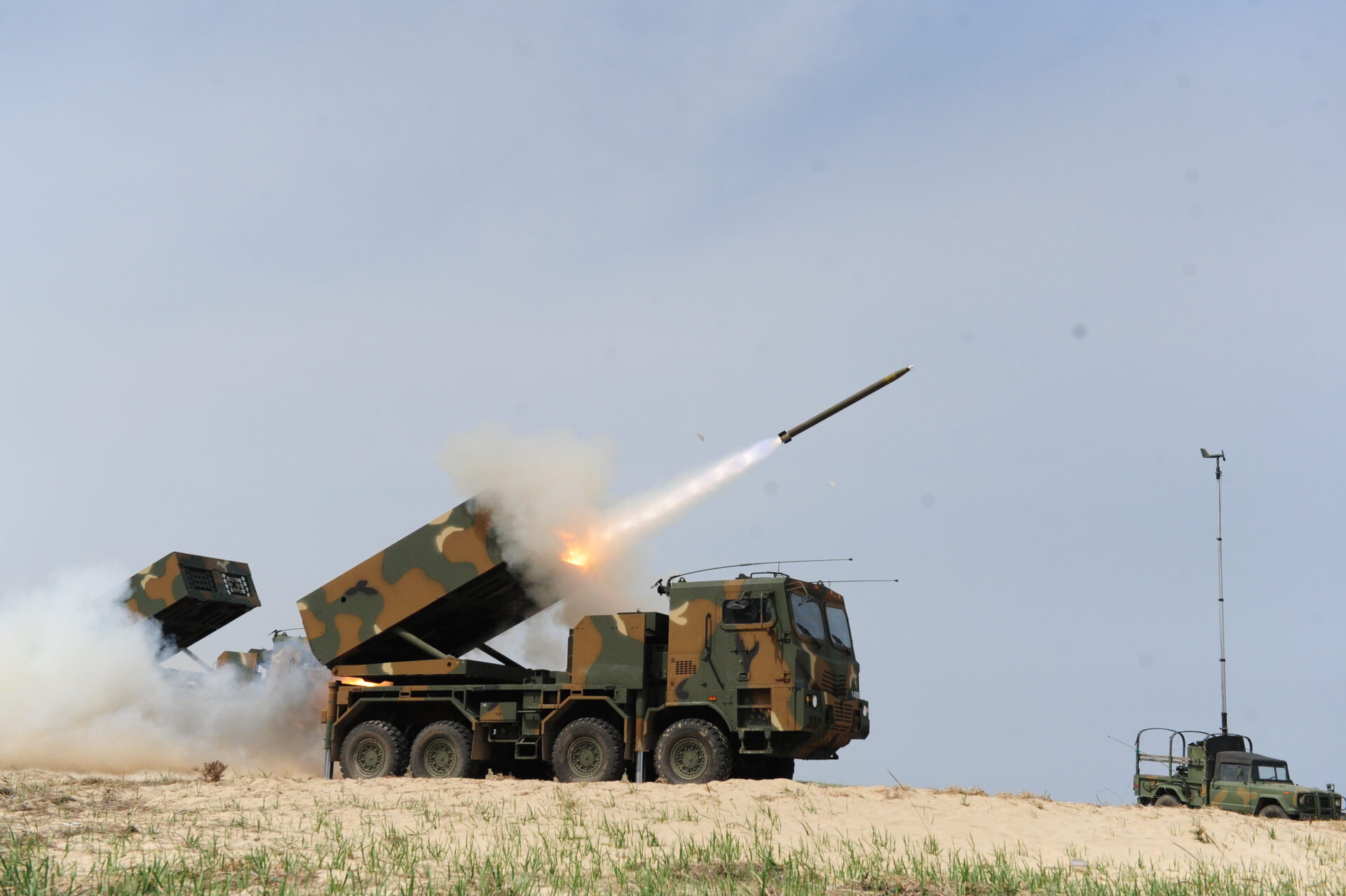
At the same time, Croatia, which also expects delivery of eight HIMARS in 2028, additionally ordered on Thursday last week 18 K239 Chunmoo rocket launchers along with ammunition and fire-control vehicles, ammunition and logistical support from the South Korean Hanwha Aerospace. The contract value was cited at 411.8 million euros, with delivery to be completed by 2030. Chunmoo is also ordered by Estonia (nine systems) and Norway (16), and in Poland it has been introduced as Homar-K from domestic production. The Croatian launchers are also to be integrated with Poland’s fire-control system Topaz.
Meanwhile, the French procurement agency DGA has tasked MBDA and Safran with delivering the long-range precision rocket system Thundart with a range of 150 kilometers. The decision against the competing system FLPt-150 from Thales and the ArianeGroup had already been made in June. France plans to procure 13 to 26 wheeled-launchers on all-terrain platforms and at least 300 guided missiles, which from around 2029 are intended to replace the last nine upgraded M270 MLRS with the local designation Lance-Roquettes Unitaire (LRU).
