
The U.S. Air Force (USAF) intends to procure a ground-based, medium-caliber air defense system for the defense of overseas bases and, within the next two years, to establish its own career field for the corresponding area of activity. This move by the American air force is primarily a response to the effective Iranian counterattacks in the Gulf region during the Iran War, which has been ongoing since late February at varying intensity. These attacks have caused substantial damage to infrastructure and grounded aircraft, as well as casualties among the fallen and wounded.
At the beginning of September, the USAF published a request for proposals for an air defense system with an initial focus on subsonic missiles and drones in classes 1 to 5. It calls in particular for the use of cost-effective ammunition, all-weather capability, resistance to jamming, and easy deployability even in structurally weaker deployment areas. Other selection criteria include engagement range, ammunition capacity, required crew, the possibility of integration into existing sensor- and fire-control systems, and the ability to defend against mass saturation attacks.

USAF follows U.S. Army in drone defense
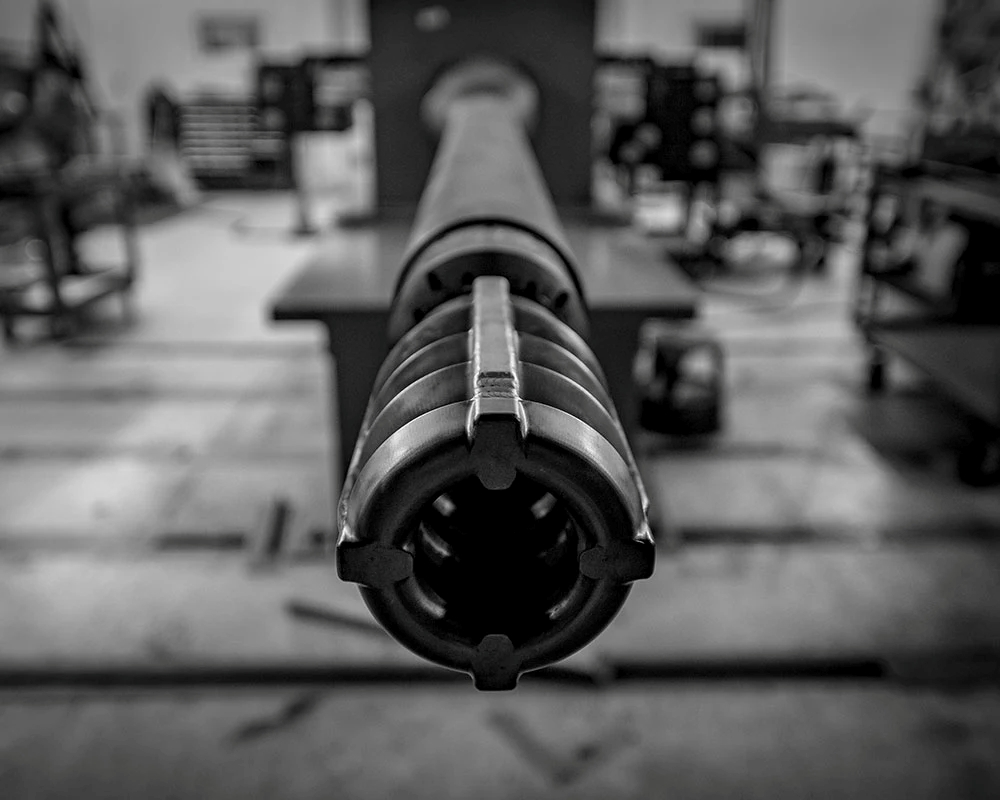
In August, the U.S. Army had already published a request for proposals for a 50-mm cannon and drone-defense ammunition and plans soon to conduct a test firing with the remotely operated XM913 Bushmaster from Northrop Grumman, which is also to be used in the future infantry fighting vehicle XM30. Currently the Army uses the Centurion C-RAM system, a land-based version of the Marine system Phalanx with a six-barrel 20-mm Gatling gun, the M61A1 Vulcan, for defense against rocket, mortar, and drone attacks.
The 2004 system, procured in response to insurgent fire attacks in Iraq, weighs 24 tons when mounted on a tractor-trailer, has a limited range, and consumes ammunition rapidly. The Army and now the Air Force appear to be seeking a solution with a larger-caliber weapon, offering greater combat distance and the use of more effective ammunition, for example with proximity fuzes. On Monday of this week, USAF Chief of Staff General Ken Wilsbach stated that the Air Force would establish its own close-range air defense career path within the next two years.
Also U.S. Navy affected by Iranian attacks
During Iranian attacks on U.S. bases in the Middle East, at least ten service members have been killed to date, and among the damages are five KC-135 tankers damaged and an E-3 AWACS destroyed. Just last week, an Army sergeant received the Bronze Star Medal with Valor for his decisive actions during a drone attack on the Kuwaiti port of Shuaiba on March 1, in which six service members were killed in a directly struck command trailer and more than 30 were wounded.
On Monday of this week, the acting U.S. Secretary of the Navy Hung Cao also confirmed earlier reports that the headquarters of the 5th Fleet in Bahrain had been virtually knocked out by repeated Iranian attacks. At the end of August, Navy Operations Chief Admiral Daryl Caudle had already stated that the U.S. Navy would not return to Bahrain in the foreseeable future. In addition to the headquarters, the base also failed for the fleet’s logistical support. The relocation to the more distant Diego Garcia base resulted in constraints on replenishment for ships on deployment.
