
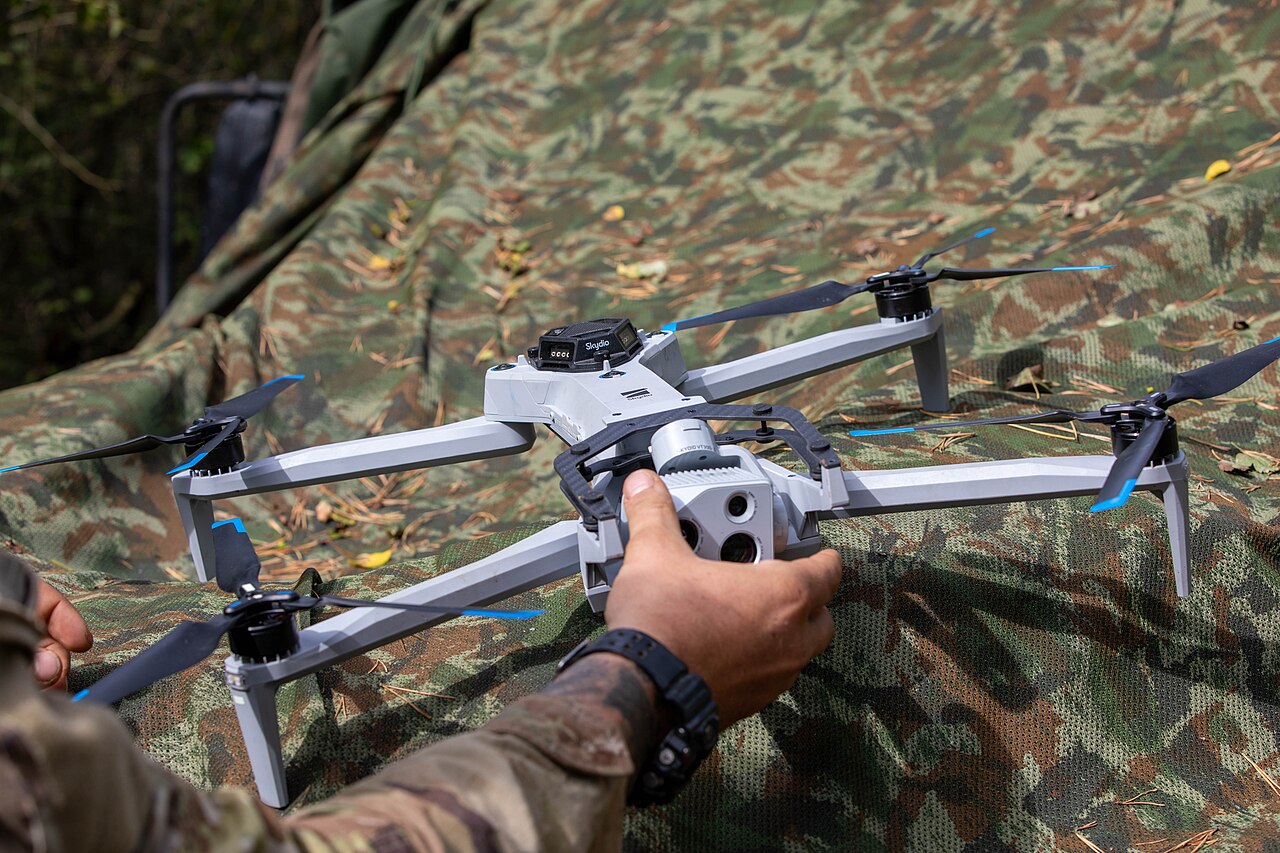
The order issued by the acting Chief of Staff of the U.S. Army, General Christopher LaNeve, to revert the unmanned assault battalion of the 173rd Airborne Brigade, formally established only in January and headquartered in Vicenza, Italy, back into a conventional airborne battalion, has sparked a controversy within American military and media circles. The unit, comprising 600 soldiers, is reportedly set to participate in exercises at the Joint Multinational Readiness Center in Hohenfels, Bavaria, this month and next, before sharing its insights and experiences “for troop design and future experiments” with the Army.
The battalion, equipped with unmanned air and ground systems, had been built since last November with the support of the then Army Chief of Staff General Randy George and the commander of U.S. Army Europe and Africa (USAREUR-AF) General Chris Donahue. The backdrop was lessons learned from the increasingly unmanned warfare in Ukraine. Ukrainian drone operators had recently taught NATO forces hard lessons in joint exercises. Given the American challenges with the use of Iranian drones in the Persian Gulf, many involved also expected the unit to endure.
U.S. Army Sees No New Situation
From the U.S. Army, however, it was said that the current exercises in Germany were from the outset the apex for the drone battalion and that its future would then be decided. That a controversy would arise is probably not least due to political infighting inside the Pentagon. Both Army Chief of Staff George and USAREUR-AF Commander Donahue, who had advocated rapid integration of unmanned systems into American units, had been dismissed in recent months by Defense Secretary Pete Hegseth.

The same applied to Army Secretary Dan Driscoll, who last year, together with Donahue, had initiated the Army Transformation Initiative to modernize the force. Hegseth and Driscoll were regarded as rivals, the former primarily aiming to remove him due to concerns about his own position. The generals George and Donahue may have been political collateral damage in the internal struggle for influence and loyalty. That the acting Chief of Staff LaNeve is now terminating a project tied to his predecessor could thus be more a display of loyalty to the Secretary of Defense than an expression of a conservative stance toward unmanned systems.
Influence of political beliefs on the U.S. armed forces
However, political beliefs beyond the political arena are also evidently shaping the development of the U.S. armed forces. Following the dismissal of General Donahue, there appears to be a plan to downgrade USAREUR-AF from a four-star to a three-star command. At least the promotion of his designated successor, Lieutenant General Kevin D. Admiral, is not currently planned. Beyond a reduced engagement in Europe, there is also a lingering nostalgia for the “good old days” that runs through the military decisions of the Trump administration.
Among these are a course against the previous diversity policies in the forces, the emphasis on formalities such as the wearing of uniforms, hair and beard styles, morning formation, and fitness training under Minister Hegseth, who recently even ordered annual testosterone tests for soldiers over 30 in the name of physical capability and combat readiness. While this could be seen as clinging to conservative military values in a positive sense, President Trump recently intervened directly in the technical interpretation of a major system by decree.
Back to “Band of Brothers” with the 173rd Airborne Brigade?
Accordingly, the Pentagon is to present a plan within 60 days to replace the electrically driven catapults and weapons elevators on the CVN-81 Doris Miller, the Ford-class aircraft carrier, with conventional steam- or hydraulic-powered systems for which parts have already been procured. Since the Ford class was designed around largely electric systems and was developed around the catapults, which were plagued by teething problems but are now tested in operation, such changes would require major modifications and entail significant costs.
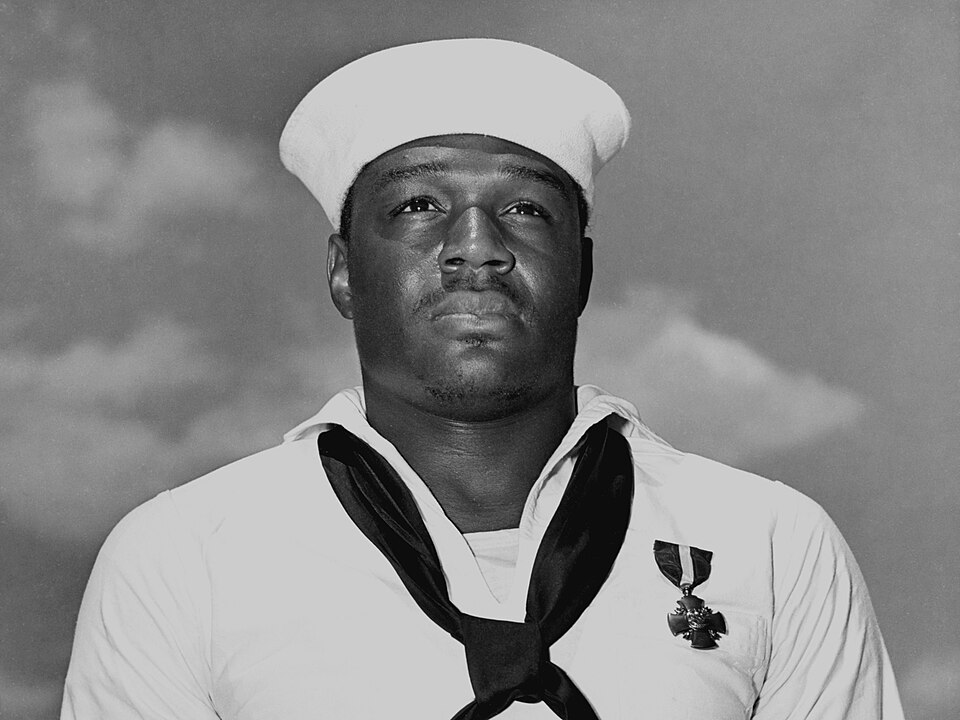
Moreover, the U.S. Navy is reportedly evaluating at Trump’s request whether the island structure, which sits far back on the Ford-class vessels based on decades of experience, can be moved forward so that future ships look like “real aircraft carriers.” The president’s preference to name CVN-81 after himself rather than after the Black Navy steward Doris “Dorie” Miller, who, during the Japanese attack on Pearl Harbor in 1941, spontaneously took over firing a heavy machine gun for anti-aircraft defense, hardly comes as a surprise.
As is well known, the Navy, at Trump’s prompting, is also developing a modern design for the battleship, something that has been extinct since World War II. That design would, of course, carry his name as well. The notion that his administration would prefer to see the 173rd Airborne Brigade as a classic paratrooper formation from the glory days of the U.S. military rather than as a modern large unit with integrated unmanned systems is not entirely far-fetched. Whether such a “Band of Brothers” image would endure in today’s drone warfare, however, remains doubtful.
