
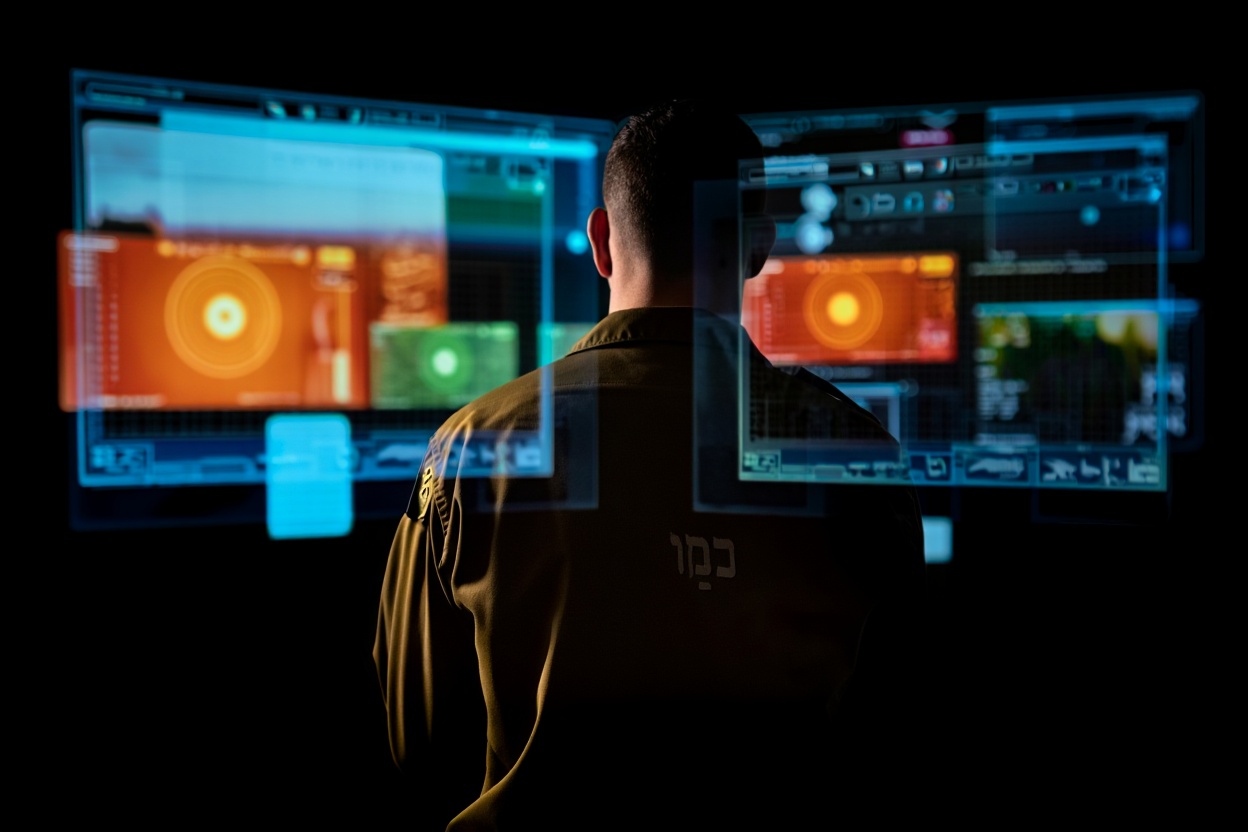
In recent months, military analysts have been closely watching a technological shift emerging from Israel. What initially appeared to be a gradual evolution is now being described by some experts as a turning point in how modern conflicts are conducted.
At the centre of this transformation is a new generation of military systems combining artificial intelligence, real-time data analysis and autonomous capabilities. While these technologies are not entirely new on their own, their integration into active operations is what is drawing attention.
For many observers, the key question is no longer whether this technology will change warfare, but how quickly it will reshape it.
A system designed to process information in real time
One of the most significant aspects of this technological shift is the ability to process vast amounts of information in real time. Modern battlefields generate enormous volumes of data, coming from drones, satellites, surveillance systems and ground units.
Traditionally, analysing this data required time and human coordination. Decisions were often made with partial information or after delays that could affect the outcome of operations.
The new systems being deployed aim to reduce that delay. By using advanced algorithms, they can analyse incoming data almost instantly and highlight patterns, movements or potential threats.
This allows military units to react faster and with a clearer understanding of the situation.
Artificial intelligence at the core of operations
Artificial intelligence plays a central role in this evolution. Instead of relying solely on human operators to interpret data, AI systems assist in identifying targets, predicting movements and suggesting strategic responses.
In practice, this means that information collected from multiple sources can be combined and interpreted within seconds. A drone image, for example, can be cross-referenced with other data streams to provide a more complete picture of what is happening on the ground.
Supporters of this technology argue that it increases operational efficiency and reduces uncertainty during complex missions.
At the same time, it raises important questions about how decisions are made and the level of human control involved.
Autonomous systems are becoming more present
Another major development is the growing use of autonomous or semi-autonomous systems. These include drones capable of operating with limited human input, as well as defensive systems that can respond to threats in very short timeframes.
In certain situations, these systems can detect incoming dangers and react faster than a human operator could. This speed is considered a critical advantage, particularly in environments where seconds can make a significant difference.
The use of such systems is not limited to offensive operations. They are also being applied to surveillance, logistics and defensive strategies.
As these technologies evolve, their role on the battlefield is expected to expand further.
A model that could influence other countries
The developments observed in Israel are being closely studied by other countries. Military organisations around the world are investing heavily in similar technologies, recognising that future conflicts may depend on speed, data integration and technological precision.
Analysts suggest that the current shift could be comparable to previous major changes in warfare, such as the introduction of precision-guided weapons or advanced communication systems.
Countries that adapt quickly to these new tools may gain a significant strategic advantage.
At the same time, the rapid pace of innovation is creating a new form of competition focused on technological capabilities rather than traditional military strength alone.
A transformation still in progress
Despite the attention surrounding these technologies, the transformation of modern warfare is still ongoing. Systems continue to evolve, and their long-term impact remains uncertain.
What is clear, however, is that the combination of artificial intelligence, real-time data processing and autonomous systems is already influencing how military operations are conducted.
For observers and analysts, this moment represents the beginning of a new phase rather than its conclusion.
As these technologies become more widespread, the way conflicts are planned, managed and executed may look very different from what has been seen in the past.
