
Around five months after the start of sending letters for the New Military Service, the Federal Ministry of Defence (BMVg) has drawn a positive initial balance. The conscription intake, which had effectively been halted with the suspension of mandatory call-up for military service in 2011, had been reintroduced in a contemporary form with the coming into force of the Military Service Modernization Act and was functioning smoothly, according to the ministry in a press release issued yesterday Wednesday.
The basis are the questionnaires that would be sent as part of the New Military Service. Through data matching, for male individuals reaching the age of 18, their reachability and availability would be checked. The conscription intake is necessary because in a state of tension or defense, mandatory conscription applies and must be implemented without delay. This conscription intake started very successfully in mid-January.
Data exchange with the registration offices, the administrative data processing, the sending of the letters, the IT-assisted questionnaire response, and the automated evaluation of the responses had worked as planned from day one. As of the cut-off date June 18, 2026, around 298,200 letters had been sent, with around 153,200 addressed to male individuals and around 145,000 addressed to people of other genders.
Content-related feedback on a possible military service relationship
Of the men, after receiving the letters, about 96 percent had responded within the set deadline including the grace period. For the remaining four percent, the initiation of an administrative offense procedure is now being considered. The response rate among people of other genders, who are not obliged to answer the questionnaire, is about four percent.
In addition to the primary goal of the conscription intake, the questionnaires would also be used to inform about career paths and postings in the Bundeswehr and to gauge possible interest in the New Military Service or service as longer-serving time soldiers. To do this, respondents could indicate on a scale from 0 to 10 their interest, where 0 means no interest in a military service relationship or in contact.
Among the male respondents, more than one in five showed interest in a military service relationship, with the average level of interest on the scale at around 5: 50 percent in the range 1 to 4, five percent at 5, and 35 percent in the range 6 to 10. Among the non-male individuals, about 55 percent of respondents signaled a comparable interest: 46 percent in the range 1 to 4, 16 percent at 5, and 38 percent in the range 6 to 10.
Contact, Counseling and Deployment
After the respondents have completed the questionnaire online, the Bundeswehr would contact them. Interested parties who have signaled high interest and timely availability are contacted first. In the conversations, the interest would be verified, questions about the employer Bundeswehr would be answered, and possible dates for a medical examination (Musterung) and, if applicable, further counseling or an assessment in a career center would be scheduled.
Despite the fact that a muster organization is still being built until July 2027, based on the questionnaire responses, around 1,500 medical examinations or assessments could already have been conducted. Of the male participants, around 80 percent were found fit for military service. A further around 600 assessment and muster appointments are currently scheduled.
After reconciling personal preferences and the needs of the Bundeswehr, more than 530 interested parties could be firmly planned for military service still in the current year based on questionnaire responses. About two-thirds of the interested individuals would be available only in one or two years due to ongoing school and training relationships. Corresponding, forward-looking employment offers would currently be prepared.
Eight percent more planned placements than last year
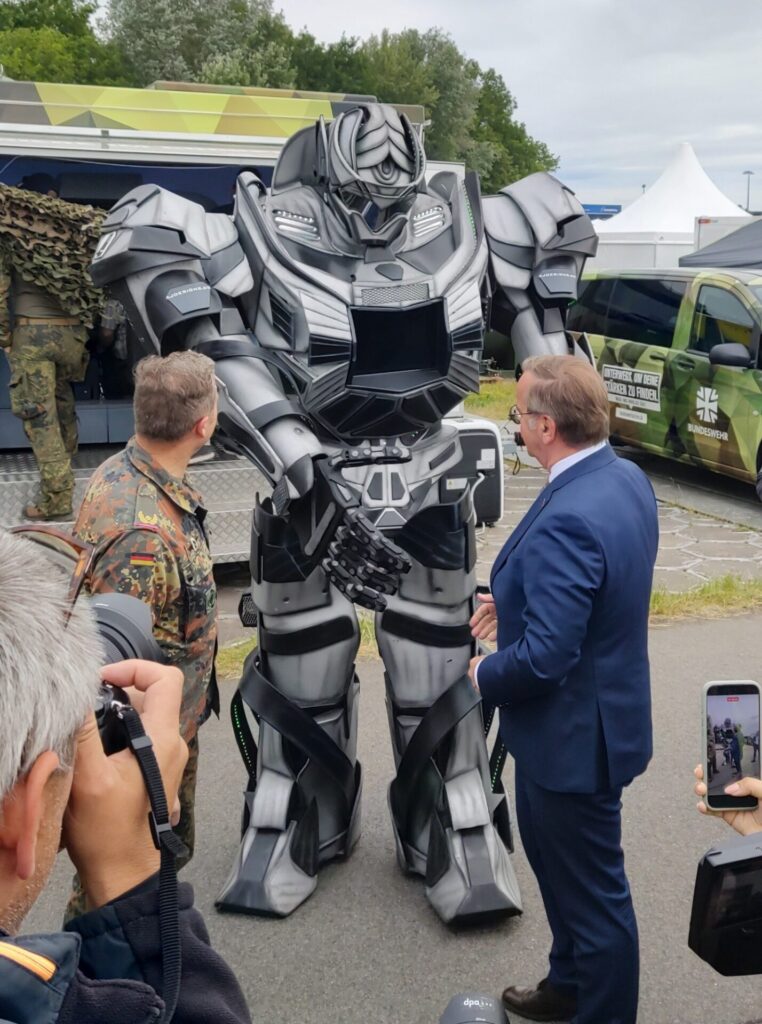
At the same time, as part of the “classic” recruitment, regular advisory and assessment appointments are taking place at the Bundeswehr career centers. Here, potential applicants from all relevant age groups sign up after their interest has been sparked, for example through the numerous campaigns or mobile appearances of recruitment, such as at trade fairs, sporting events, or the recent International Aerospace Exhibition ILA.
In total, around 10,000 placements for 2026 could be planned for the New Military Service. In the year-on-year comparison, this is around eight percent more than last year. For all career paths, by June 22 of this year there had already been around 38,500 applications and 11,000 hires. This represents an increase of around 24 percent in applications and 13 percent in new hires compared with the same month in the previous year, which had already been a record year for personnel recruitment.
In addition, men who had not shown interest in the questionnaire would be invited to muster soon. The selection is based on residential proximity and the regional muster capacity available. These musterings would be gradually expanded to, as stipulated in the Military Service Modernization Act, from July 1, 2027, muster all 18-year-old male persons.
In conclusion, the BMVg explains that the New Military Service is being taken up in a noticeable way as part of the Bundeswehr’s growth. With its framework conditions, it is aimed at all interested parties who wish to commit to service in the armed forces for up to two years. Due to the overall positive development in personnel recruitment and retention, it is currently expected that the personnel growth targets in accordance with Section 91 of the Soldier’s Act for 2026 will be achieved.
