
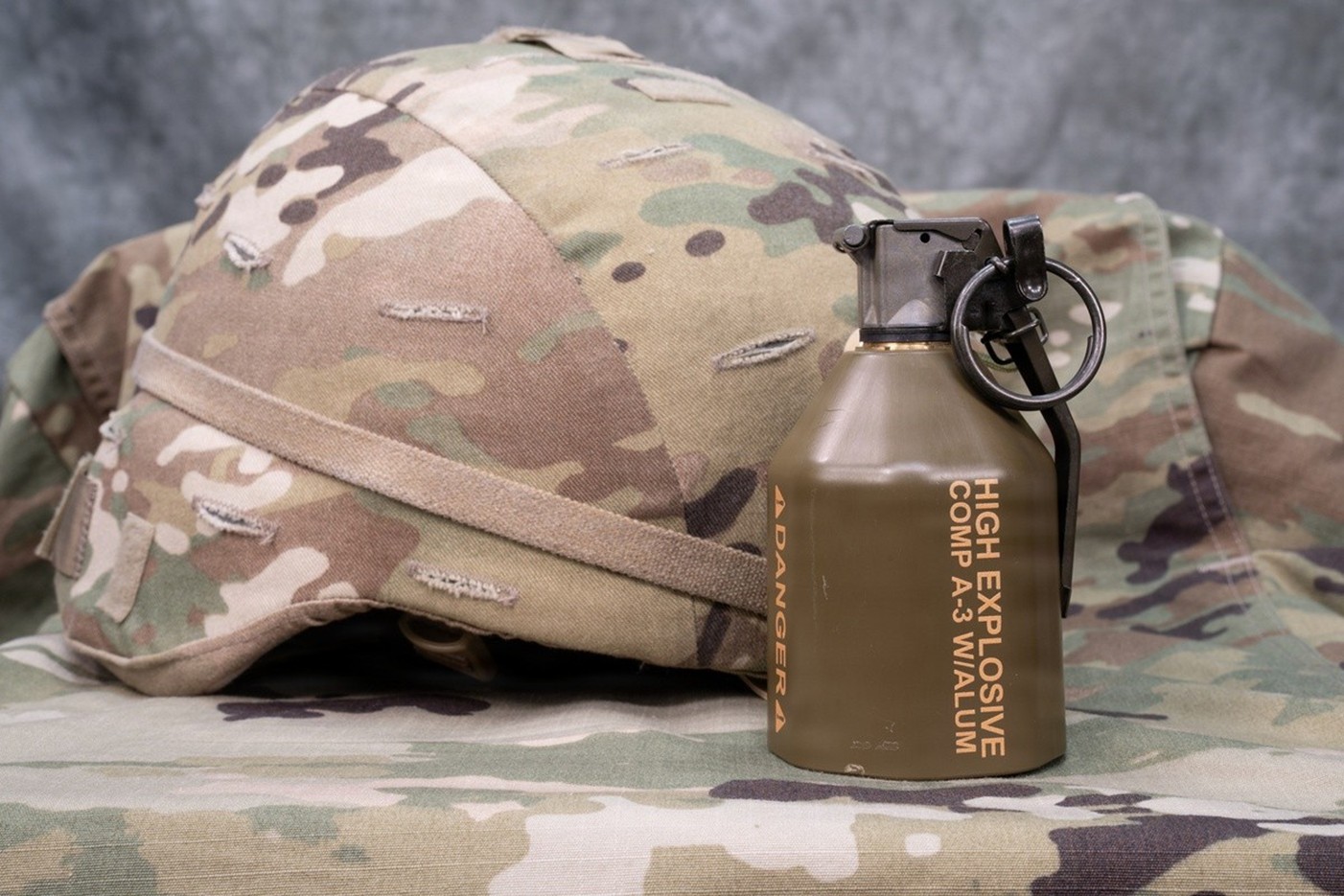
The Battelle Memorial Institute recently entered into a partnership with the U.S. Army’s Close Combat Systems Program Office to support the Full Material Release (FMR) – the full release for use – of the new offensive hand grenade M111 (OHG). The M111 is the first new offensive hand grenade for the U.S. armed forces since 1968. Battelle is headquartered in Columbus, Ohio, and, according to its own statements, is the world’s largest independent, non-profit organization for applied science and technology.
The M111 was developed over many years in close collaboration between the U.S. Army and Battelle to ensure a safe, high-quality, and reproducible manufacturing process. Battelle supported various stages of development: starting with the initial conceptualization, through the completion of process verification testing (PVT), up to the conduct of manufacturing readiness testing (FMR) – realized through the production of prototypes for nearly 7,000 grenades as well as first-article and lot acceptance testing.

In collaboration with the U.S. Army Combat Capabilities Development Command (DEVCOM) Armaments Center at the Picatinny Arsenal, the M111 OHG will replace the outdated grenade body and fuze of the Mk3A2 grenade family. This makes it the first new kinetic hand grenade to receive the manufacturing readiness release (FMR) since the Mk3A2’s fielding in 1968. The Mk3A2’s use is restricted due to its asbestos-containing grenade body – in contrast to the M111, which features a plastic body that burns away completely during detonation.
The new M111 hand grenade
The M111 will provide enhanced training and operational readiness, while at the same time offering soldiers a safer option for action, according to the U.S. Army at the unveiling. It also gives soldiers the ability to fight more effectively in tight urban environments by relying on blast overpressure (BOP) to achieve its lethal effect rather than shrapnel. When used in hand grenades, the BOP exerts an effect on hostile personnel and material without fragmentation, thereby representing a significant tactical advantage in combat.
The M67 fragmentation hand grenade operates through fragments that can be deflected when deployed in closed, confined terrain – such as inside buildings, rooms, and structures. The M111 OHG, on the other hand, generates a strong blast overpressure, which is far less affected by obstacles in enclosed and confined environments. In open terrain, soldiers will therefore use the M67 to maximize the deadly effect of the fragments. In closed and confined terrain, however, soldiers will turn to the M111 to exploit the impact of the blast overpressure on the enemy.
“One of the most important lessons from house-to-house fighting in Iraq was that the M67 hand grenade was not always the appropriate tool for the mission. The risk of friendly fire on the other side of a wall was simply too high,” explained Colonel Vince Morris, Program Manager for Close Combat Systems at CPE A&E. “A hand grenade based on the blast overpressure principle can, however, quickly clear a room of enemy fighters – without giving them a hiding place – while at the same time ensuring the safety of our own forces.”
Development and Certification
Another key advantage of the new M111 design is standardization. The new grenade and its training version, the M112, use the same five-stage ignition sequence as the M67 and its training version, the M69. This enables soldiers to train under realistic conditions (“train as you fight”) – which in turn enhances their combat performance and effectiveness. In addition, the M111 and the M112 use the same fuzes as the M67 and the M69, respectively.
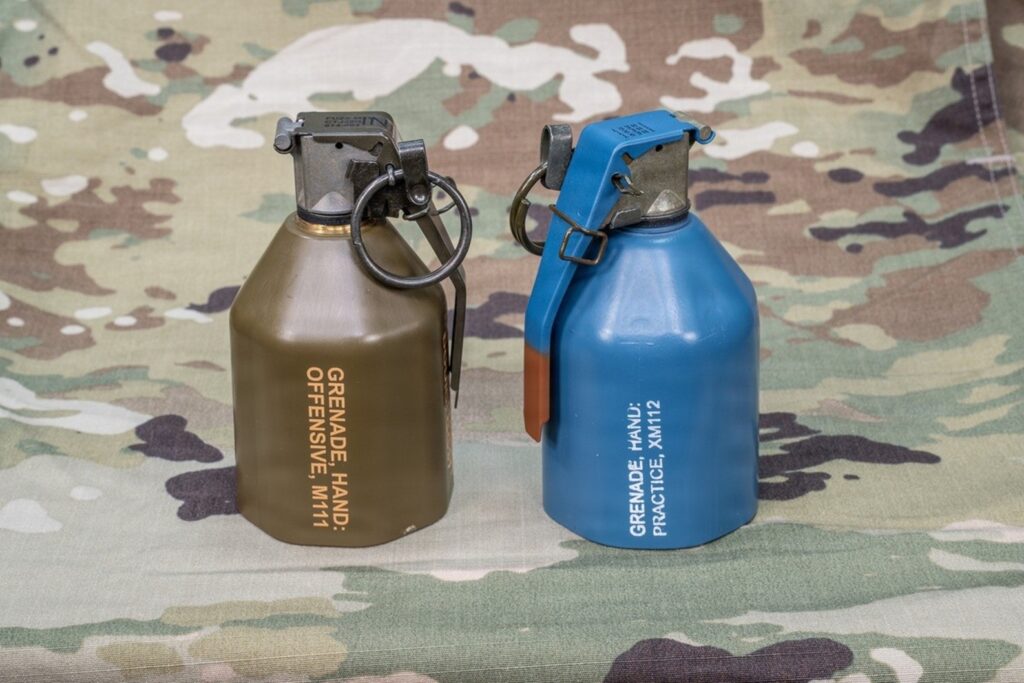
These developments enable U.S. Army procurement experts to reduce costs by leveraging economies of scale in the procurement of both grenade types, made possible by shared fuze production lines. Additionally, both grenades are subject to intellectual property rights owned by the U.S. government. This, in turn, allows the U.S. Army to award production contracts effectively in a competitive environment. This improves production opportunities for a wide range of suppliers, while simultaneously ensuring the greatest possible benefit for our “customers” – the soldiers and the taxpayers.
Battelle and the U.S. Army worked closely over several years to optimize the technical procedures required to increase the safety and performance of grenades in the field. “Battelle’s support within the M111 program has enabled the Army to qualify the M111 and bring it into serial production,” explained Sam Knutson, Director of Advanced Materials and Energetics. “Thanks to our unique position as a trusted development partner, we could ensure that the government is now able to meet both current and future production demands.”
“Through our collaboration with the U.S. Army Combat Capabilities Development Command Armament Center (DEVCOM AC) as well as with customers across the entire military, Battelle focuses on rapidly advancing innovative solutions that directly benefit soldiers in the field,” said Dan Pikora, General Manager of the National Security business segment at Battelle. “We are very much looking forward to continuing the collaboration with DEVCOM AC to provide technologies that support mission success.”
