
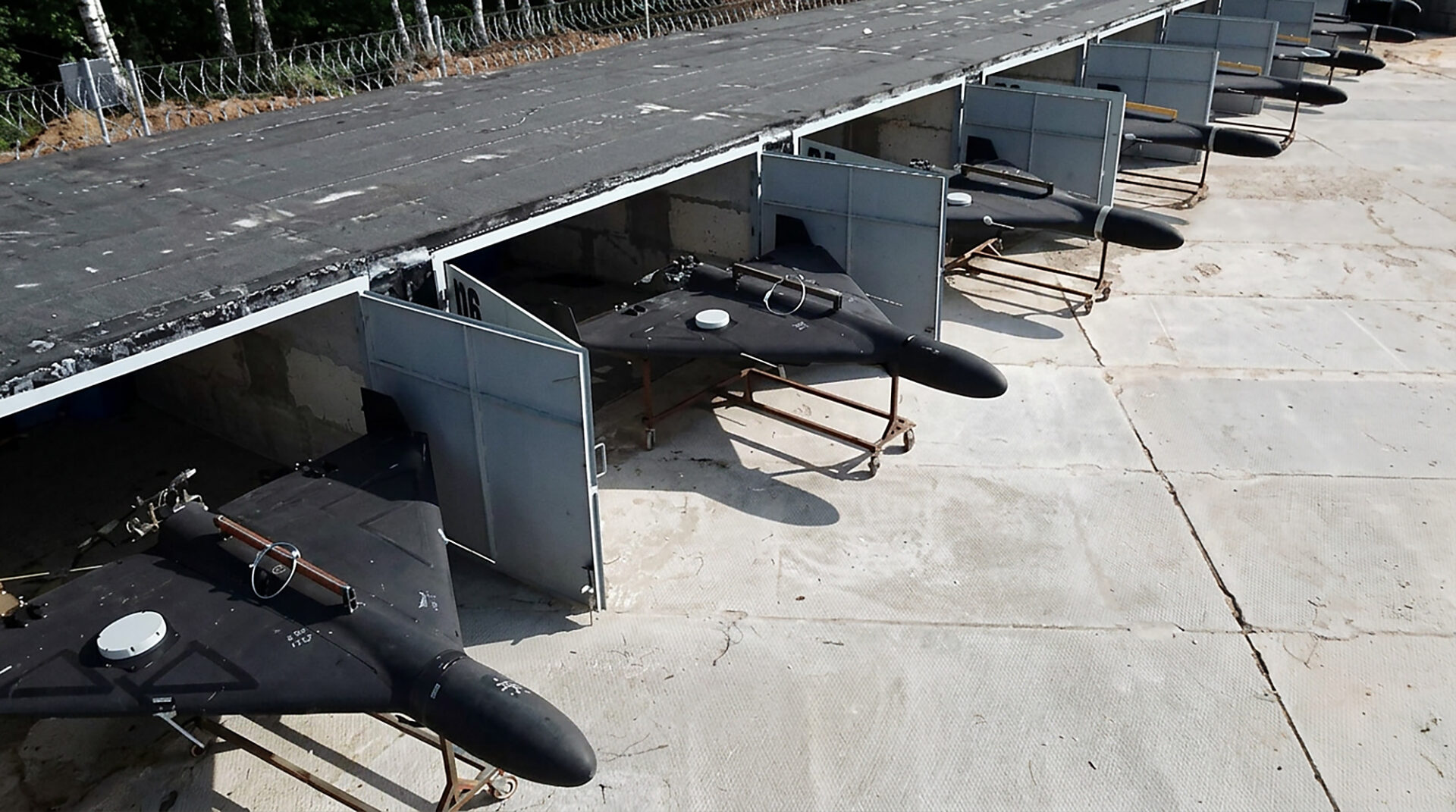
Russia is increasingly equipping its combat drones with heavier and more specialized warheads. In some variants of the Geran family, the warhead weight has nearly doubled compared to the original versions. At the same time, Russia is expanding the range of available warhead types. According to information from Israeli security circles provided to the author, the more developed Russian drones could in the future also be delivered to Iran.
Evolution from Shahed to Geran
The war in Ukraine has driven rapid development of Russia’s unmanned flight systems. Alongside increases in production numbers and the introduction of new propulsion technologies, the effectiveness of the warheads used is increasingly in focus. Russia is increasingly relying on different warhead types rather than a single standard armament.
In Geran-2, the Russian development of the Iranian Shahed-136, produced in part in the Alabuga special economic zone in the Russian Republic of Tatarstan, Russia has significantly increased the warhead weight. While the original systems were equipped with warheads of 40 to 50 kilograms, in developed variants, according to Israeli sources cited to the author, warheads weighing 90 kilograms are now in use. These heavier warheads, however, come with a reduction in range. But even this reduced range is enough to make the drones a constant threat to areas far behind the front in Ukraine.
Jet-powered Geran and new warheads
Alongside the increase in warhead weight, Russia is expanding production of jet-propelled attack drones. With the Geran-4 and the larger Geran-5, the Russian drone family, originally based on the Iranian Shahed-136, expands to include further systems.
The use of jet engines distinguishes these drones from the propeller-driven variants of the Geran family. This growing diversification of Russia’s attack drones presents the Ukrainian air defense with additional challenges.
In addition to conventional explosive warheads, information from Israeli sources indicates that thermobaric warheads, incendiary explosive warheads, shaped-charge warheads, and fragmentation warheads are now in use. This expands not only the arsenal of available Russian attack drones but also the spectrum of their armament. The development therefore affects both the aircraft platforms and their military payloads.
From the Ukraine war to the Middle East?
The further development of Russian attack drones is also watched in Israel with concern. Israeli sources assume that Russia, within the framework of its close military cooperation with Iran, could in the future also supply Tehran with more developed unmanned flight systems. Some of these systems could subsequently reach the Iran-supported Hezbollah in Lebanon or the Houthi militia in Yemen. Thus, the transfer of drone technology from Iran to Russia could increasingly become a two-way technology transfer.
The military experiences of Russia from the Ukraine war could thus also have impacts on the threat landscape in the Middle East. This concerns, alongside Israel, in particular the security of international shipping in the Red Sea. And thus Europe as well.
Author: Arie Egozi, Israel Correspondent
