
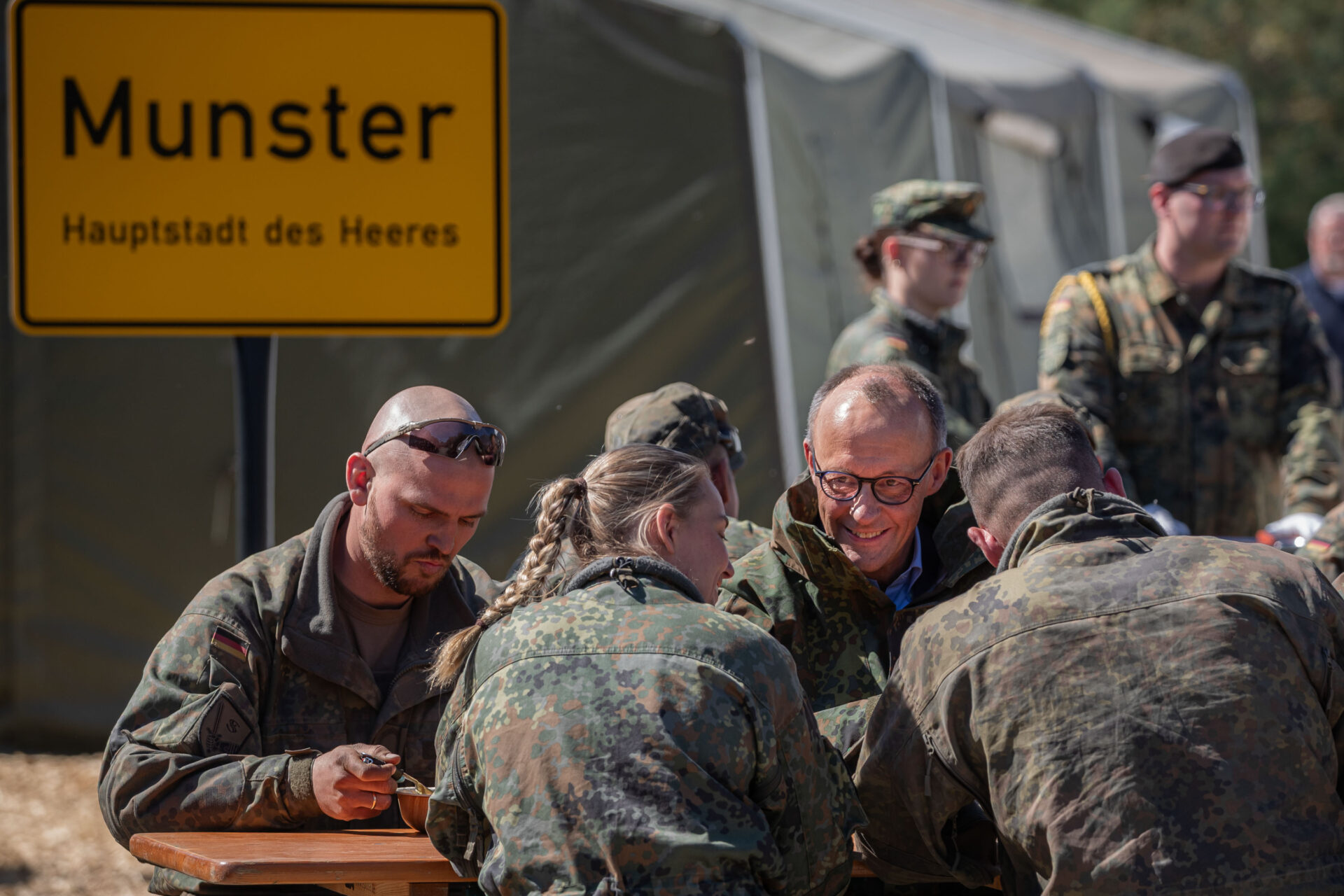
Chancellor Friedrich Merz visited the Army in Munster, the “Capital of the Army,” on Thursday this week, April 30. The training and testing exercise “How the Army Will Fight” demonstrated what the battlefield picture of the future in the land dimension could look like. The soldiers of the Army showed how they fight in a changed war and which proven and new systems they intend to use.
It was simultaneously Merz’s first visit to the Army. The Inspector of the Army, Lieutenant General Dr. Christian Freuding, greeted the Chancellor on firing range 3 at the Munster Training Area. The German Army is the bearer of military operations in the land dimension, he explained at the outset. Here military decisions are brought about. The mission of the land forces remains unchanged: to hold and seize ground, also against enemy resistance. But how this mission will be fulfilled is fundamentally changing.
What do the current conflicts and the resulting fundamental changes on the battlefield mean for operational command, for the deployment principles, for equipment and weapon systems and for the way the Army is organized? The soldiers answered this with a training and testing exercise in live fire, where the proven and the new, as well as what is still needed, were linked to form a complete picture.
Reconnaissance, Enemy Contact, Evasion, Counterattack
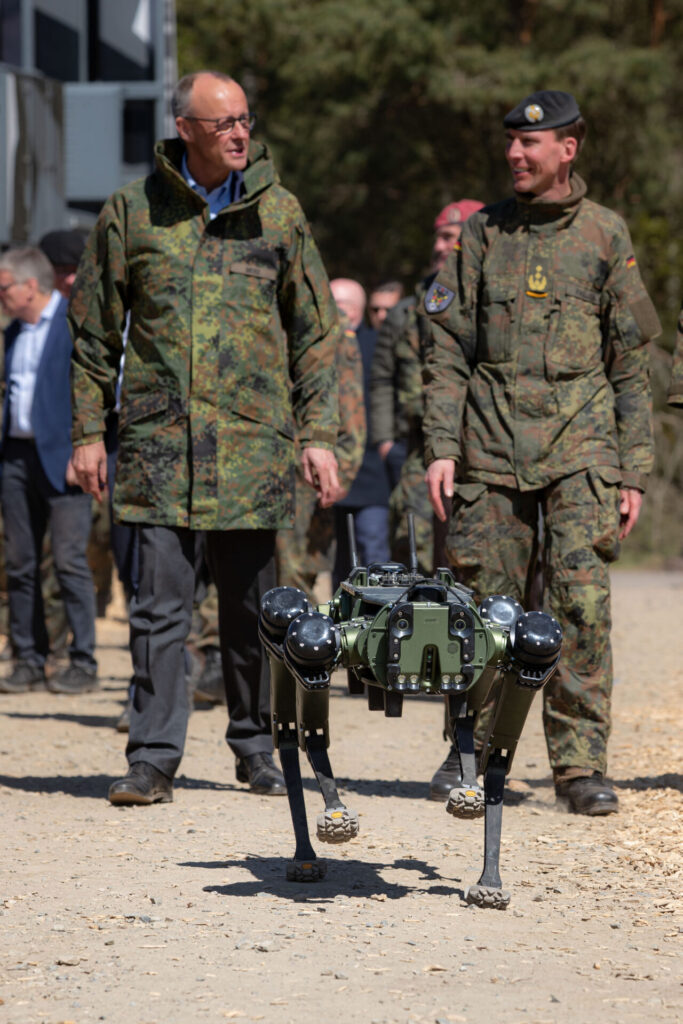
The exercise guided Chancellor Merz through all phases of a military operation. Reconnaissance, first unmanned enemy contact, evasion and finally the counterattack: what was shown reflects a war picture to which the soldiers of the Bundeswehr are adapting. Technological leaps and the following developments became visible, which the Army follows and advances. These include, for example, mastery of very large data volumes with the help of Artificial Intelligence and the use of drones; not in isolation, but in conjunction.
After the dynamic demonstration, Merz held discussions with soldiers of the exercise unit, the Armoured Brigade 9. He subsequently checked the Static Display organized by the Office for Army Development to learn about the systems that are already in the pipeline, those to be procured, or those that served as examples of required capabilities on site.
Chancellor Sees the Entire Bundeswehr in Transition
“We have seen what you can do, but we also see that a substantial portion of the road lies ahead of us. The entire Bundeswehr is undergoing a transformation. We must be deterrent and defense-ready in the here and now, capable of fight tonight. At the same time, we must prepare for the challenges of tomorrow and the day after tomorrow. This will require continued, greatest efforts,” emphasised Chancellor Merz in his statement.
The threats and the way conflicts are conducted in the world today have changed fundamentally and would continue to change, Merz continued. In consequence, procurement, structures, personnel, and infrastructure must all be aligned to these changes and new challenges and synchronized.
He further emphasised: “The first steps are taken and the government will do everything to ensure that our soldiers can continue to fulfill the mission we assign to them politically in the future.” In conclusion, he reaffirmed: “I am personally deeply impressed by what we have seen here today. It is impressive to see how far we have caught up, but it is just as clear that we must continue to push this work forward.”
