
With €168.2 million, the EU funds eight projects for propulsion systems, explosives and ammunition. German companies are involved. First results are expected from 2027.
The European Commission announced on 14 October the results of the first call under the pillar “Industrial Reinforcement Actions” (IRA) of the European Defence Industry Programme (EDIP). Eight industrial projects for the production of explosives, propellant base materials, propulsion systems, and warheads were funded. They were selected from 83 applications from companies in 23 Member States and Norway.
According to the Commission, the funding will trigger industrial investments of €1.26 billion. The projects are spread across 17 sites in 14 EU Member States and Norway. The funding set in motion starts from a feedstock for propellant powder and addresses several stages of the production chain: explosive-propellant components and propulsion.

The funds come from the European Defence Industry Programme (EDIP), whose total budget amounts to €1.5 billion. The funding area Industrial Reinforcement Actions links to the ammunition program ASAP. The focus of the current selection is energetic materials and components – including explosives, propellants and propulsion systems. From 2027, the projects are expected to enable more than 20,000 tonnes of energetic materials per year, 3,500 propulsion systems for missiles and drones, 200,000 warheads for loitering munitions, and 60 million cartridges. Production lead times are to be reduced by up to 90 percent, and capacity reserves to handle peak demand are to be established. In addition to higher production, the Brussels boost provides for better protection of facilities against physical and cyber threats.
Flanked by the production funding is the simplification package Omnibus V, approved by the Council on 9 October, which among other things aims to speed up approval procedures for defense projects.
German involvement in nitrocellulose and rocket motors
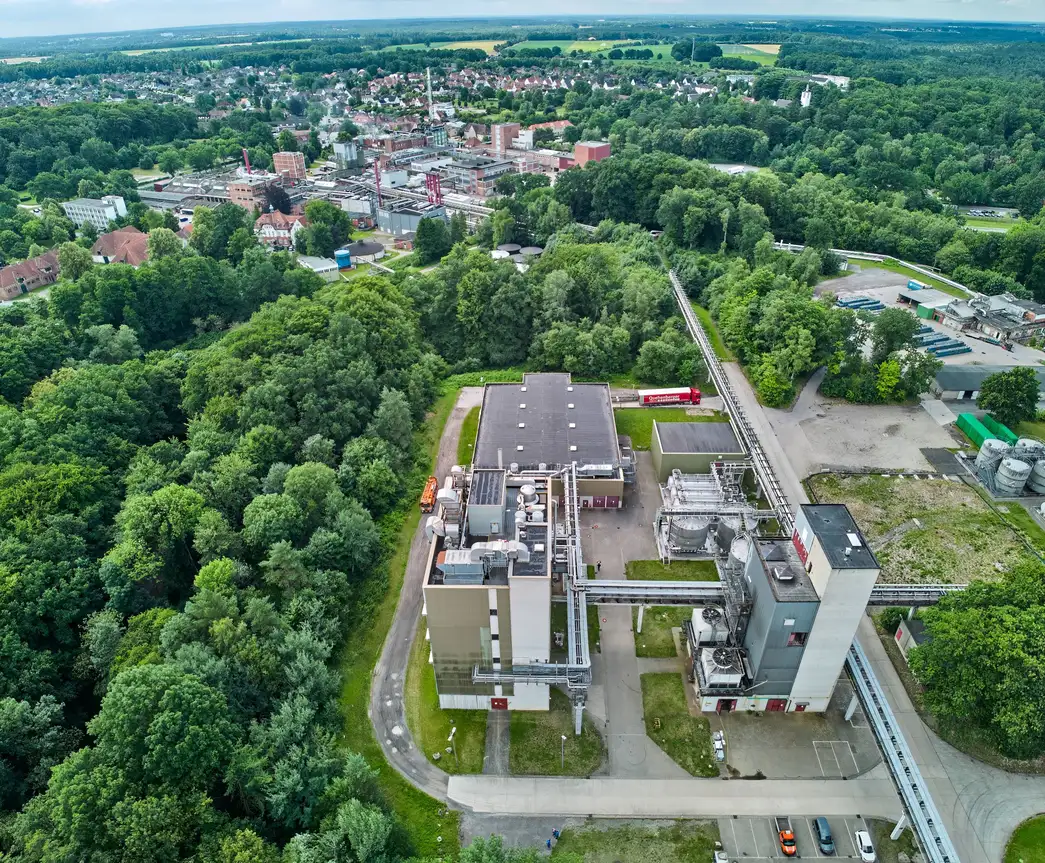
For SECURE-NC, MSM Walsrode receives around €29.3 million. The company, which has belonged to the Czech Czechoslovak Group (CSG) since 2025, is expanding its production of nitrocellulose for ammunition manufacturing.
For the ROCMAN project, a consortium consisting of the Norwegian munition and propulsion manufacturer Nammo, Diehl and four other European companies will receive €30 million to expand the production of solid rocket motors. Nammo estimates its own EU funding share at €25 million, to be matched by the Norwegian government in the same amount. A fourth production line is planned in Raufoss. Additional storage capacities in Germany are intended to improve responsiveness to peak demand.
TNT from Finland and propulsion systems from the Czech Republic
€30 million – the largest grant – goes to the THUNDER project of the Finnish explosive manufacturer Forcit. The company is building in Pori a plant for trinitrotoluene (TNT), an explosive used in artillery and mortar ammunition, which, according to the company, will double Europe’s production capacity for military TNT. Forcit expects to begin operations in 2028. Binding supply agreements with European defense companies have already been concluded. The Finnish armed forces have secured purchase quantities for 2028 to 2037 under contract.
With around €8.7 million, the EU supports BS-PROPEL in the Czech Republic for small turbojet engines for missiles and drones. Other projects concern warheads for loitering munitions, components for base-bleed gas generators, which increase the range of 155-mm artillery rounds, and small-caliber cartridges.
Conclusion: Increasing production is not an end in itself
The EU targets concrete industrial bottlenecks with the funding and continues to support the industrial base beyond the original emergency instrument ASAP. In addition to expanded production, capacity reserves should be created to handle peak demand, and the sites should be better protected. This strengthens the prerequisites for supply security and military endurance.
The announced reduction of production lead times by up to 90 percent remains an expectation. From this, no blanket shortening of delivery times for finished ammunition by the same extent can be derived. The published documents do not detail the starting values or the ramp-up for each project. Forcit’s planned start of operations in 2028 also shows that new capacities will only become available gradually.
For the investments to have their effect, production expansion and procurement plans must align. The analysis by Gerhard Heiming of the European Court of Auditors highlights the risk of fragmented investments and persistent capability gaps. EDIP is already addressing this by promoting joint procurement. Yet incoherent national planning continues to encourage duplicate structures and capability gaps. What matters is where additional capacity will have the greatest impact on supply. Without clear performance requirements, rising defense budgets alone will not create effective military clout.
Speeding up and secure, qualified manufacturing must go hand in hand. This includes giving specialized suppliers and small and medium-sized enterprises access to contracts, affordable pre-financing, and prompt approvals. Long-term offtake commitments create planning security.
The success of the funding program, i.e., its contribution to the supply and resilience of the armed forces, will have to be measured by additional qualified products, reliable delivery dates, and the ability to quickly scale production in response to rising demand.
Author: Hans Uwe Mergener, Editor
