
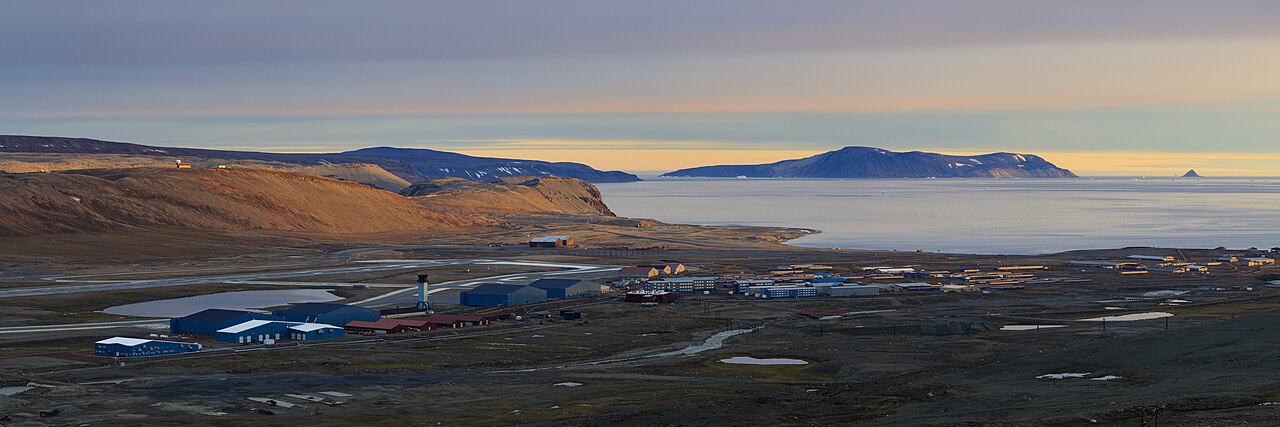
Following the signing of another amendment to the American-Danish Greenland Defense Agreement of 1951 during the United Nations General Assembly in New York yesterday Tuesday, the United States intends to reopen two additional military bases on the Danish-owned autonomous Arctic island. US President Donald Trump, Danish Prime Minister Mette Frederiksen, and her Greenlandic counterpart Jens-Frederik Nielsen had their signatures on the agreement on the sidelines of the General Assembly, which had been quietly negotiated in recent months between the three parties.
In the text, the re-establishment of a “defense zone” at the 1958-abandoned U.S. base at Narsarsuaq in southern Greenland, as well as a new one at eastern Greenland’s Mestersvig, which is used as a base by the Danish “Sirius” dog-sled patrol, is explicitly mentioned. Previously, since the 1990s the northwestern Greenland Pituffik, formerly Thule Air Base, was the only remaining of the 17 former American military bases on the island. Currently, about 150 U.S. soldiers are still stationed at the base, which since 2020 belongs to the U.S. Space Force, and which is primarily used for space surveillance and early warning of ballistic missile attacks.
US Presence in Greenland since World War II
During the height of the Cold War, the former Thule housed the majority of Greenland’s population of American soldiers, with up to 6,000 men out of a total of as many as 10,000. The United States had occupied the then colony of Denmark during World War II to help establish air bases for transatlantic flights and to deny Germany the use of the island for military purposes. After the founding of NATO, they signed with their alliance partner Denmark the 1951 agreement, which granted them broad rights on the island for the purpose of defense against the Soviet threat in the Arctic region.
That included, among other things, the establishment of defense zones at their bases under joint American-Danish sovereignty. However, the United States reduced its presence already during the Cold War, as technological advances reduced the need for air bases for layovers on flights to Europe and back. Thus, the 1958 base at Narsarsuaq, handed over to Denmark, became a civilian airport in 1978, serving international air traffic on the island alongside Nuuk, the capital.
Involvement of the Greenlandic Government in the Arrangements
Not least because Greenland had become an autonomous region within the Kingdom of Denmark in 1979, there was, in 2004, with the Igaliku Agreement, an amendment to the 1951 agreement that bound the Greenlandic government into the rules of joint sovereignty and listed Thule as the single joint defense area at the time. The American rights to establish bases and station additional troops in coordination with the other two parties remained unaffected.
Negotiations for another amendment began after President Donald Trump earlier this year again asserted American claims to all of Greenland and even threatened military action against NATO partner Denmark. After Denmark and European allies ostentatiously increased the military presence to enhance security against threats Trump claimed from Russia and China, who in turn threatened tariffs and the EU with countermeasures, the president ultimately gave in for the promise of a “new, better agreement.”
Restrictions on Military and Economic Presence by Third Parties
The newly concluded agreement praises Trump, who, not least due to his unexpectedly prolonged war against Iran and its economic repercussions, urgently needed a political foreign-policy win before the upcoming midterm elections in the United States, as a timeless fulfillment of all American interests. Regarding stationing rights, however, the text contains no novelties, but only clarifications such as the establishment of unmanned facilities, counter-espionage measures in the vicinity of the defense zones, and the rights of U.S. ships to travel through Greenlandic waters.
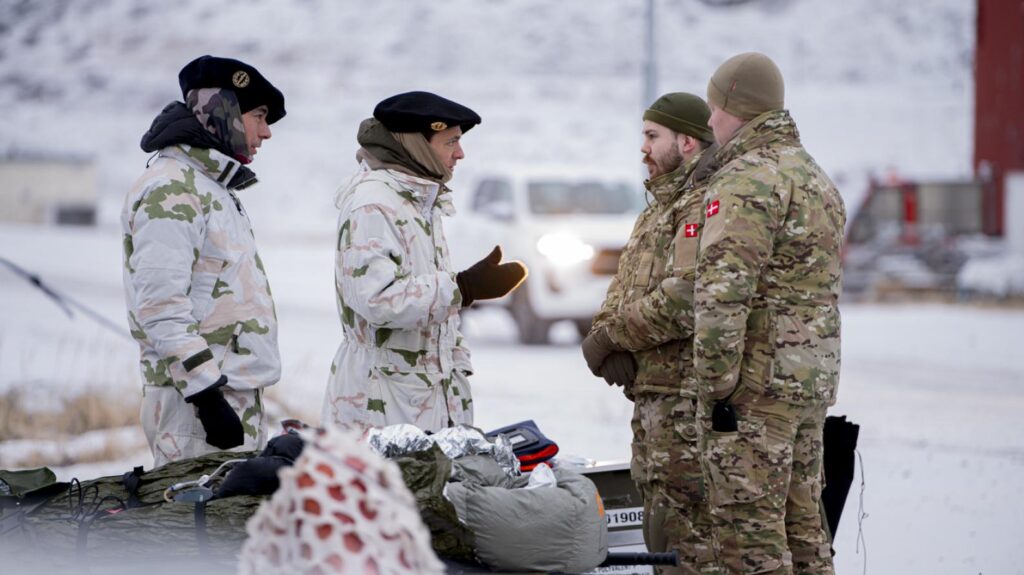
However, what is new is the prohibition on bases or the permanent stationing of troops by nations that are not members of NATO or the EU. Direct investors from such nations are also not to have control, significant influence, or access to non-public information that could threaten national or public security. This is to be ensured by Greenland’s government in close cooperation with Denmark and in consultations with the United States. If Greenland chooses independence from Denmark, the two other parties also intend to press that it remains a NATO member to safeguard their agreed rights.
Close Binding of Greenland’s Defense to NATO
Overall, the agreement again tightly binds Greenland’s defense and the rights of the United States to NATO from the preamble onward. Whether these rights would continue if the United States itself were to withdraw from the alliance as has been repeatedly threatened by Trump remains to be seen and could lead to interesting debates among international-law scholars. The implementation of the American promises to expand their presence remains to be seen. The mention of unmanned facilities points especially to integration into the planned defensive system “Golden Dome,” which Trump has cited as one of the reasons for his demands.
With the restrictions on the military and economic presence of non-NATO and non-EU members, the security concerns raised by the American side are also addressed. A veto-right reportedly to this effect by the Trump camp is not, at least, included in the text, though the design of the cooperation and consultation mechanisms mentioned there remains to be seen. The securing of economic interests, such as in the deposits of uranium and rare earths near Narsaq close to Narsarsuaq, could of course also be connected with the planned establishment of new defense zones.
