After Italy, like many other European NATO states, had unveiled plans to expand its defense capabilities, including utilizing the EU SAFE program for affordable loans, the government in Rome now appears to be setting other priorities. While there has so far been no reversal of initiatives such as strengthening the armed forces by 40,000 personnel by 2033, the procurement of the KF51 Panther main battle tank and the Lynx infantry fighting vehicle, one apparently considers reducing the borrowing through SAFE.
Thus, at the end of May, the government informed the EU Commission that, instead of the reserved amount of 14.9 billion euros, it might utilize only four to five billion. At times there was talk of a complete waiver. While five other EU member states have already signed such agreements and Poland had already, on May 29, become the first country to receive 6.6 billion euros, Italy’s decision remains pending.

Other EU Members Could Benefit from Italy’s Waiver
If less money than planned is drawn, there would accordingly be more left for other interested parties from the pot totaling 150 billion euros. In total, 19 countries have signaled a need. The Italian hesitation was accompanied last week by confirmation that it would not participate in NATO’s Prioritised Ukraine Requirements List (PURL). Through this mechanism, alliance members fund the procurement of American weapons for Ukraine, after the U.S. government under President Donald Trump halted direct support to the country attacked by Russia.
Since Italy’s security situation has not fundamentally changed, the shift of focus from defense to other priorities is likely due to domestic political reasons. Italian Prime Minister Giorgia Meloni has, in this context, emphasized the importance of domestic spending to reduce the cost of living and, in particular, the effects of oil price increases brought about by the Iran war. With her former close ally Trump, she has recently engaged in high-profile clashes around the war in the public arena.
The Meloni Government Is Under Domestic Political Pressure
Meloni’s government, which must contest elections next year, has been under pressure since a surprisingly lost referendum on judicial reform in March. Although the government’s core project was considered popular, roughly 54 percent of voters voted against it, which was seen as an expression of general dissatisfaction. The effects of the Iran war have further worsened the country’s economic situation, as they have elsewhere.
In this situation, Meloni also used the defense of Pope Leo XIV against attacks by Trump over the pope’s stance on the war as an opportunity to bolster her profile. Additionally, her government refused certain US aircraft access to Italian bases for operations against Iran. The nominal reason was the absence of individual prior requests.
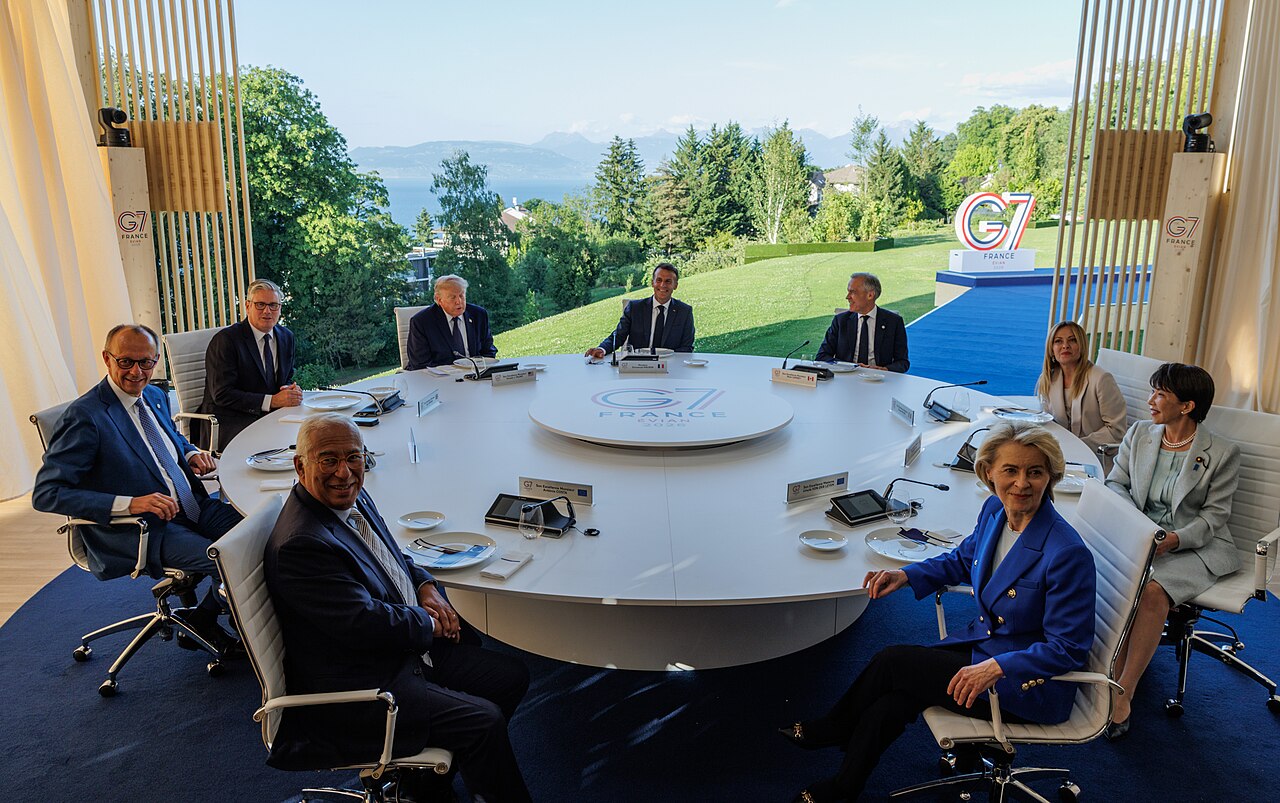
Last week, Trump and Meloni then carried out a social-media dispute over the alleged begging by the Italian woman for a joint photo at the recent G7 meeting in Evian, France, which she stylized as an attack on the nation’s honor. At the NATO level, the disagreements show that, following his controversial actions regarding Venezuela, Greenland and Iran, Trump is not only regarded as a “toxic” ally by the European political right but that resistance to him is seen as a way to boost popularity.
