
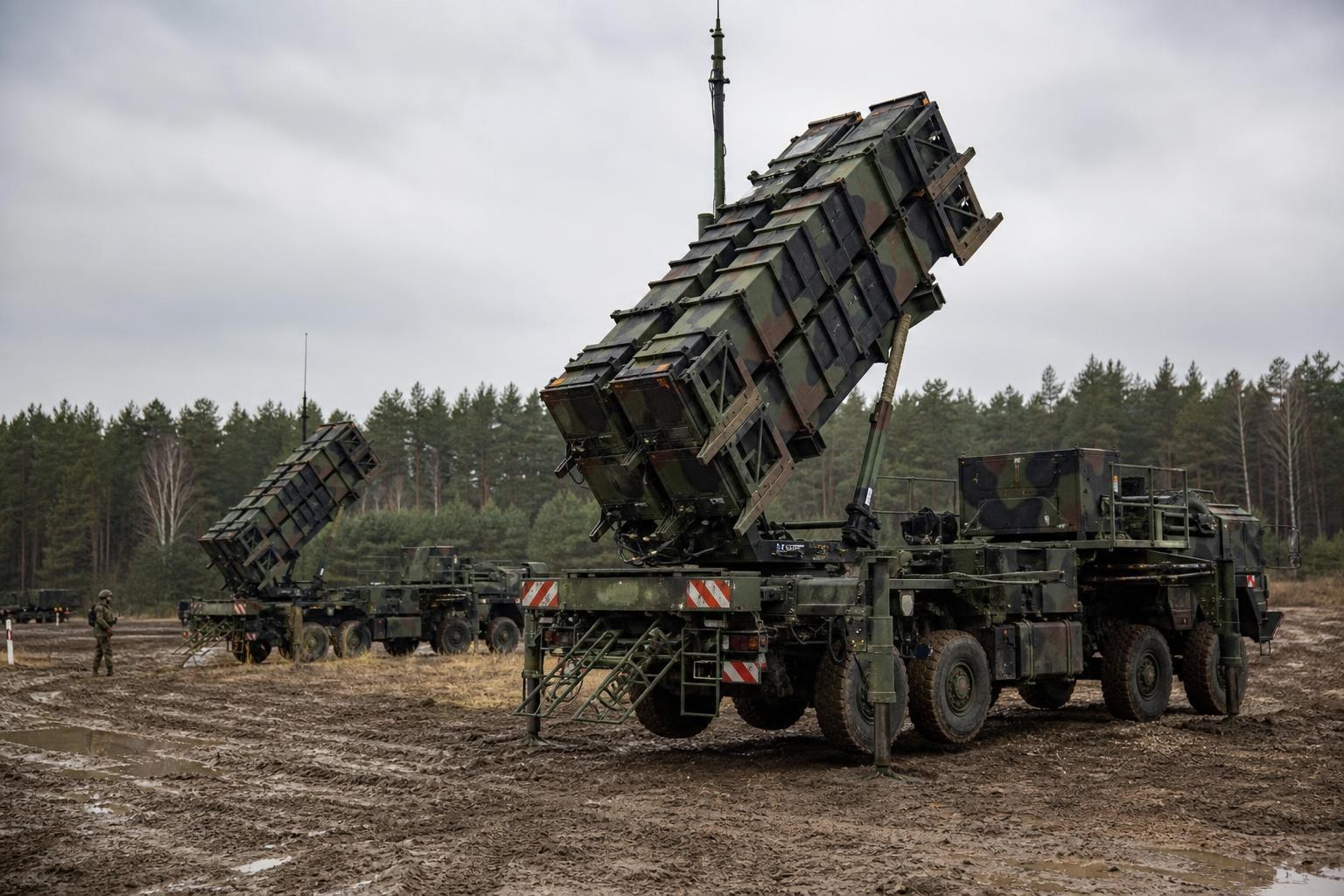
Poland has shifted air defense units to its frontier with Belarus in an unprecedented move, signaling a sharper posture along NATO’s eastern flank. “We are ready for any scenario,” the defense minister said, casting the deployment as a measured step born of prudence, not panic.
Officials describe the operation as defensive and time-bound, calibrated to the evolving threat picture in the air domain that has intensified since Russia’s invasion of Ukraine and Minsk’s deepening military integration with Moscow. “This is a signal of resolve, not escalation,” a senior military official said, stressing that Poland’s rules of engagement remain unaltered.
Why Warsaw Is Moving Now
Polish planners cite a “complex and dynamic” airspace around the northeast, where patterns of drone activity, border provocations, and missile-flight corridors have grown less predictable. Belarus hosts Russian forces and advanced systems, while cross-border incidents in recent years—ranging from wayward missiles to suspected airspace intrusions—have shaped Warsaw’s risk calculus.
The government frames the shift as deterrence through visibility: placing credible interceptors where they can both defend and signal. “We won’t wait for a crisis to crystallize,” the defense minister noted. “Our posture is preventive, our message clear.”
The Hardware And The Posture
The deployment blends layered defenses, with long-range interceptors backing short-range and very short-range assets, all linked by radars and command networks designed to shrink reaction times. Analysts say Warsaw is leveraging recent procurements to create an elastic, mobile shield over key corridors, air bases, and logistics lines.
While officials avoid platform specifics, the structure points to a mix of high-altitude interceptors, low-altitude SHORAD, counter-drone teams, and mobile sensors. The emphasis is on speed, survivability, and the ability to disperse under pressure.
- Long-range interceptors to engage high-speed threats at distance
- Short-range units to protect forward batteries and critical nodes
- Counter-drone teams for low, slow, and small aerial targets
- Distributed radars and command networks for rapid cueing
Belarus, Russia, And The Risk Equation
Minsk has called past Polish fortifications provocative, but Warsaw argues that Belarus’s own militarization and alliance with Moscow have altered the baseline. “We will not be intimidated on our frontier,” a Polish official said, citing hybrid pressure at the land border and episodic airspace alerts.
Regional allies view the move as complementary to NATO’s forward defense, not a solo gambit. Lithuania and Latvia, managing similar pressure, have tightened their own vigilance, while NATO’s air policing continues to cycle additional sorties over the Baltics when needed.
Rules Of Engagement And The Message Sent
Commanders say the mandate is straightforward: track, classify, and—if necessary—engage objects that violate Polish airspace, consistent with national and alliance procedures. “Any object that threatens our territory will be addressed decisively,” the Air Force command stated, adding that de-escalation and verification protocols remain intact.
The visible presence of batteries, radars, and patrolling units is designed to complicate an adversary’s planning. It raises the cost of probing air defenses, deters opportunistic flights, and reassures border communities who have lived with sporadic sirens and alerts.
Implications For Ukraine And The Supply Arc
Poland remains the primary gateway for Western aid flowing to Ukraine, with hubs and railheads that are both vital and vulnerable. By pushing layered defenses eastward, Warsaw seeks to better protect air approaches, reduce response latency, and create more options if threats materialize near logistics arteries.
Officials emphasize that the deployment does not divert support from Ukraine but reinforces it. “Every kilometer of secure airspace on our side strengthens the supply chain on theirs,” a logistics officer said, underscoring the interlinked nature of security across the theater.
Domestic Backing, Fiscal Reality
Public opinion in Poland remains broadly supportive of strong defense outlays, even as budgets face post-pandemic and inflationary headwinds. The government portrays investment in air defense as cost-effective insurance against a risk that is both plausible and escalating in complexity.
Experts caution that sustainability will hinge on training, maintenance, and munitions stockpiles—areas where even wealthy allies can fall short. “Hardware without depth is a brittle shield,” one analyst warned, pointing to the need for robust replenishment plans and joint exercises.
What To Watch Next
Signals to monitor include the tempo of drills near the border, the pattern of airspace notifications, and Belarusian or Russian messaging around joint activities and deployments. Movement in allied rotations, additional radar coverage, or expanded no-fly advisories could indicate further tightening of the posture.
For now, Warsaw’s step is both practical and symbolic: a forward stance that underscores resolve, tends to immediate defense, and telegraphs that ambiguity in the skies will be met with clarity on the ground. As one officer put it, “Deterrence is credibility made visible—and mobility is our edge.”
