
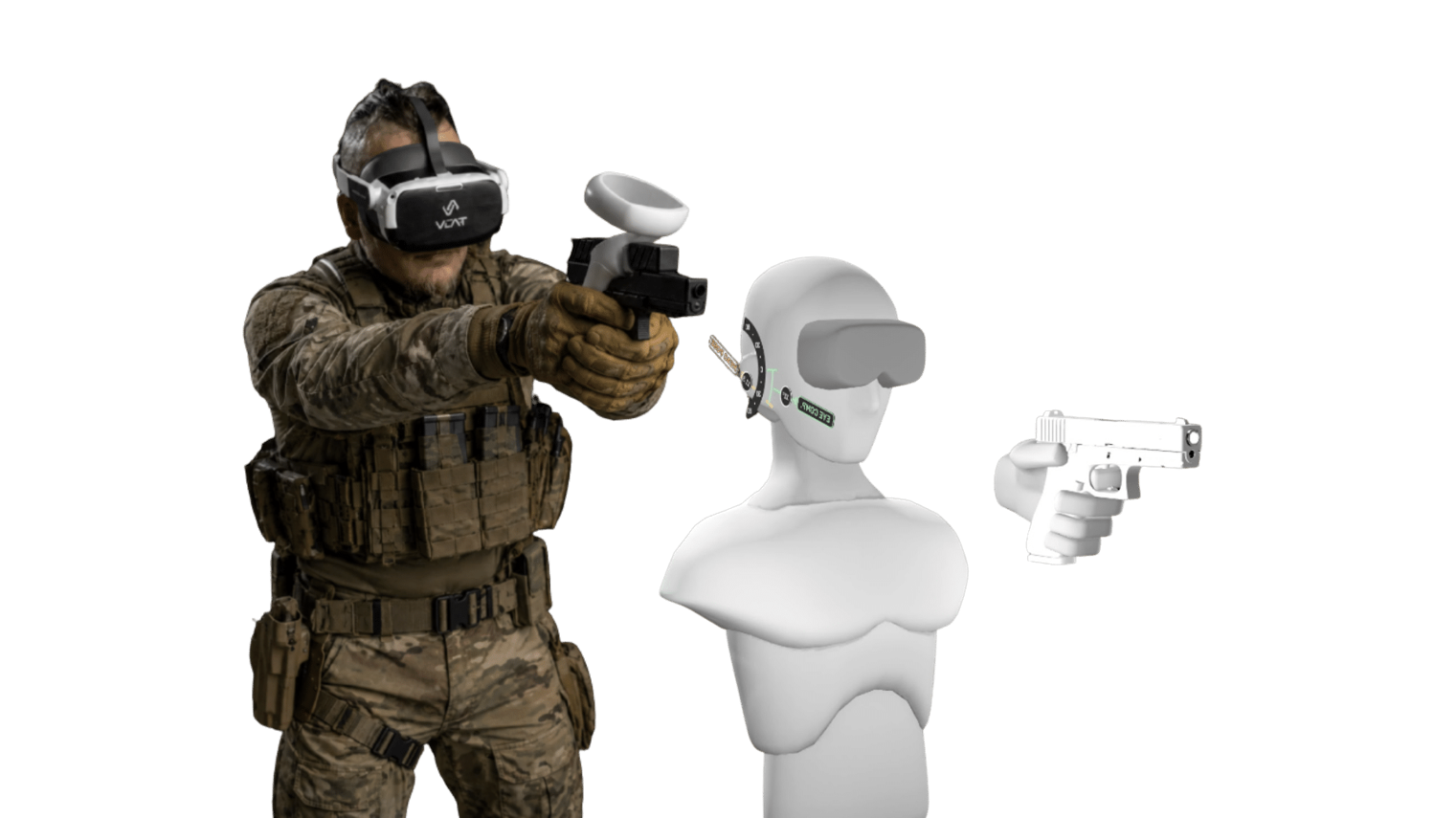
Eyeviation from Israel, a defense-technology-focused company that develops AI solutions for training and performance assessment, presents new deployment data on VCAT (Virtual Cognitive-Aware Trainer). At AUSA 2026, users will be able to test the system on site. This is an AI-assisted platform for marksmanship training and instruction. The results demonstrate a novel approach to developing and maintaining military marksmanship through individualized, data-driven training.
Dieses Verfahren ermöglicht es Streitkräften, ihre Ausbildungskapazitäten zu erweitern, ohne dass dafür proportional mehr Ausbilder, Schießstandzeiten oder Munition erforderlich sind. Die sogenannte „Human-Aware AI“ (auf den Menschen ausgerichtete KI), erfasst nicht nur, ob ein Ziel getroffen wurde, sondern analysiert auch, wie Soldaten agieren. So lassen sich Leistungshemmnisse identifizieren und gezielte Verbesserungen erzielen.
Die VCAT-Plattform nutzt Daten zu Blickverhalten, Aufmerksamkeit, Reaktionszeit und Leistung, um die Ursachen von Schießfehlern zu verstehen und individuelles Training sowie Feedback zu ermöglichen.

In evaluations by NATO military units, Eyeviation recorded a 42 percent increase in shooting accuracy and a 19 percent increase in speed, while live-fire ammunition consumption was reduced by 30 percent. Additionally, a single supervisor can oversee up to twelve soldiers at once. Each participant completed, within roughly three hours of simulation-based training, a workload equivalent to more than 1,200 rounds in live operation. This provided the necessary repetitions to make corrections, refine techniques, and consolidate improved shooting behavior within a compressed timeframe.
Personalized shooting training at expert level
As military systems become increasingly complex, the demands on soldiers in terms of precision, judgment, and technical skills rise. However, as larger groups must be trained more frequently, traditional training models reach their limits: the individualized coaching necessary to identify errors, correct weaknesses, and boost performance can hardly be ensured anymore. In light of the shortage of experienced instructors, armed forces need solutions to scale personalized training without compromising quality.
Eyeviation meets this challenge with technology that identifies specific performance bottlenecks in individual trainees and translates these insights into personalized training instructions. Rather than merely recording shooting results, VCAT analyzes performance incorporating visual, cognitive, behavioral, and motor signals. This allows weaknesses to be identified, training to be directed more precisely, and progress tracked over time.
This enables personalized, expert-level training at scale without requiring a proportional increase in instructors. As an integrated component of existing military training structures, VCAT serves both as a training and an assessment system. It helps instructors detect performance deficits early, thereby shortening the time to reach the required standards.
VCAT kurz vor der Einführung in NATO-Mitgliedstaaten
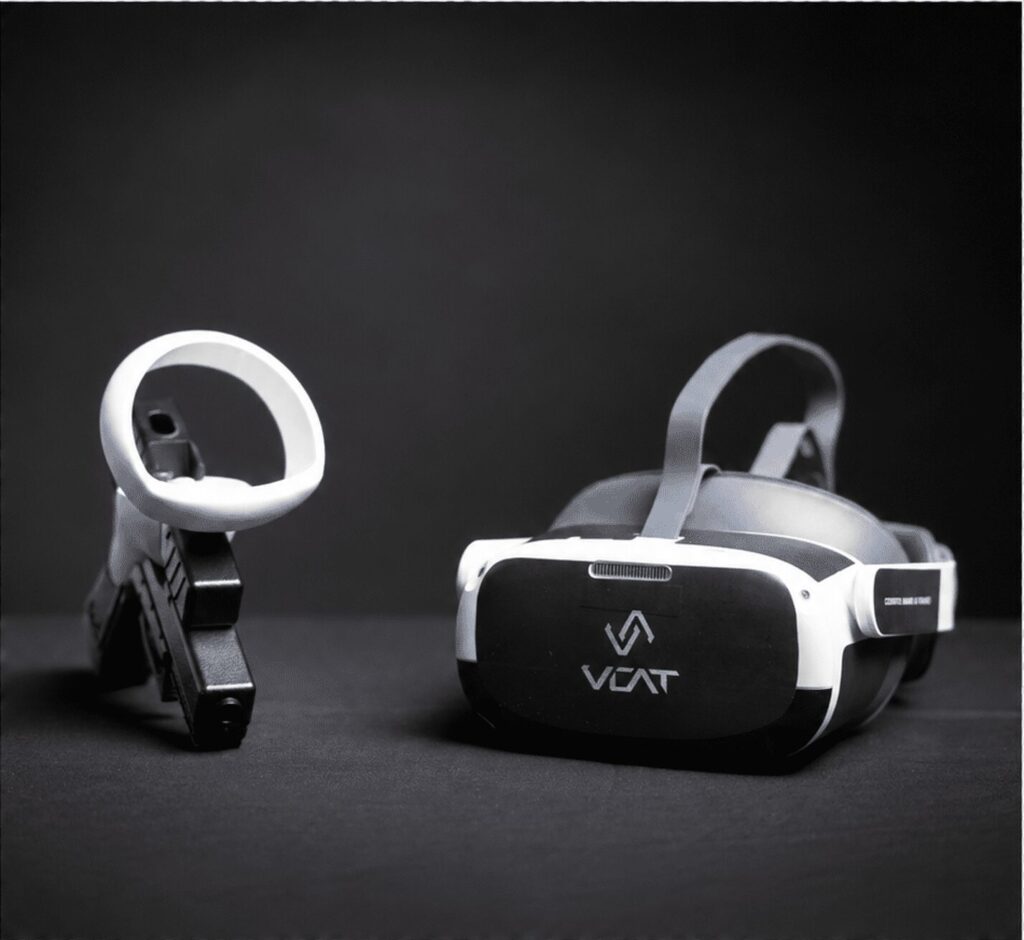
VCAT currently supports tens of thousands of military and security personnel through deployment with defense contractors as well as within military ecosystems, and is close to deployment with units of NATO member states. The deployment model is designed to expand individual training within existing training environments, without replacing live-fire shooting training or established military structures.
“In military training, it’s not enough to measure only the outcome. If you can’t measure the factors that led to that outcome, they can’t be systematically improved,” explained Or Landwer, CEO and co-founder of Eyeviation. “VCAT identifies the factors that limit the performance of each participant and translates these insights into individualized training. This enables the armed forces to provide expert guidance for many more soldiers without increasing the scarce resource ‘expert instructors’ to the same extent.”
