
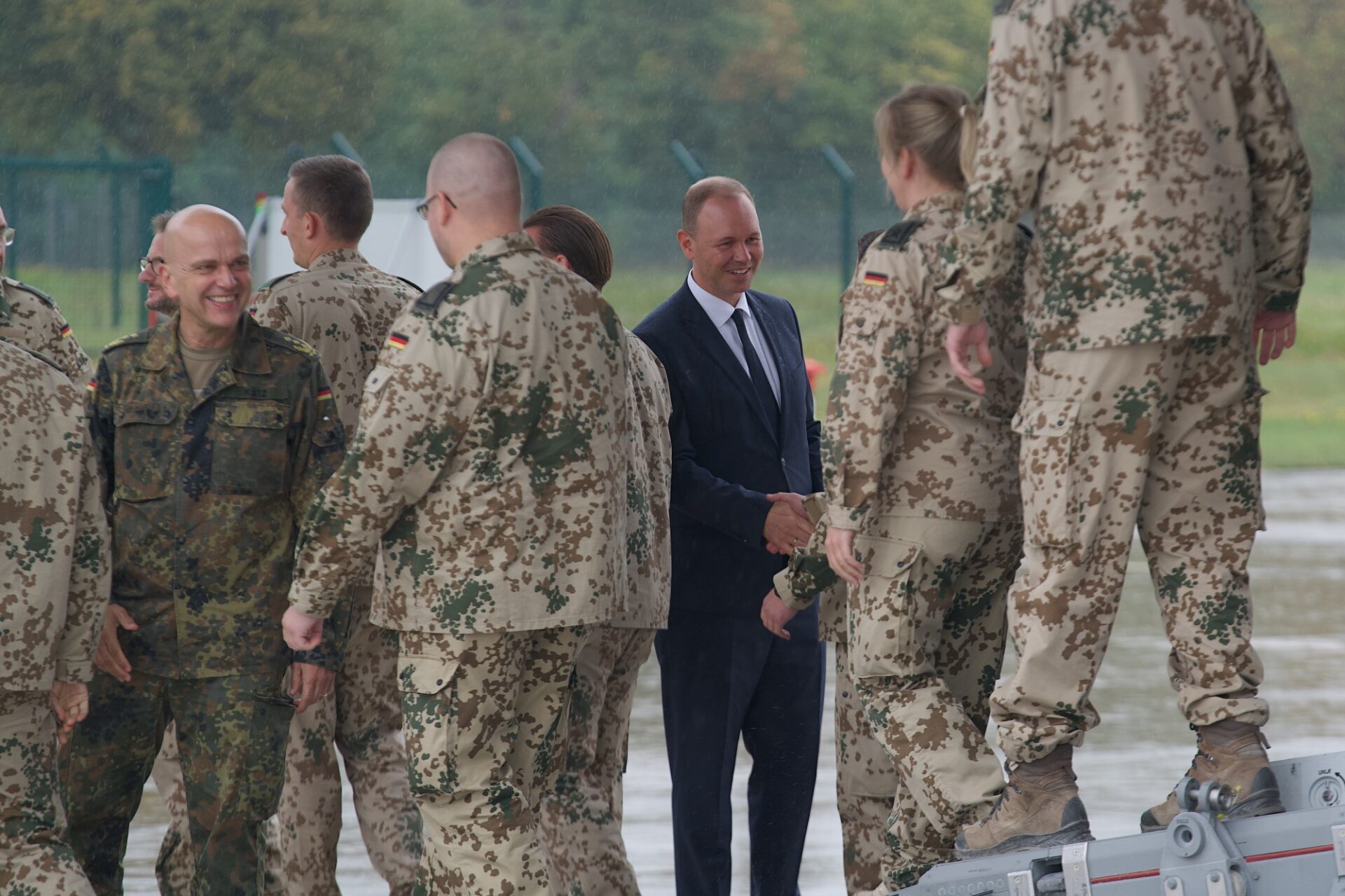
After more than a decade of military engagement in northern Iraq, the German armed forces are withdrawing their units from the country. With the orderly redeployment of the contingent, according to the Operational Command of the Bundeswehr, a central pillar of Germany’s contribution to the international anti-IS coalition within the framework of the Counter-Daesh/Capacity Building Iraq (CD/CBI) mission has reached its conclusion.
The withdrawal marks the transition from direct military support to the Iraqi forces taking independent security responsibility. Since the mandate began in 2015, the Erbil location in the Autonomous Region of Kurdistan has stood as a representation of Germany’s determination to effectively counter the terrorism of the “Islamic State” (IS).
In one of the region’s most critical phases, the Bundeswehr has assumed responsibility for regional and global security. “After more than a decade, the current presence of the Bundeswehr in the Kurdistan-Iraq region ends,” said Lieutenant General Günter Katz, Commander of the Luftwaffentruppenkommando. “Under dynamically changing circumstances, the deployed soldiers have carried out their mission professionally and with dedication.”
Capacity building and partnership development
The focus of the work in Erbil lay on training, advising, and providing material support to the regular Iraqi forces as well as the Kurdish Peshmerga. What began in 2015 as immediate aid to counter an acute threat evolved into sustainable capacity building (Capacity Building). Among the main successes of the German engagement, according to the Operational Command, are:
- Training and capacity-building: A five-figure number in the low tens of thousands of members of the Peshmerga and the Iraqi security forces were trained by German specialists in tactics, medical service, engineering, and mine clearance.
- Structural and reform advisory: Through direct advice to the Kurdish Ministry of Defense, the prerequisites for sustainable and unified command structures were created.
- Logistical and medical support: The Bundeswehr provided for years a highly professional medical care and logistical infrastructure that benefited not only its own forces but the entire alliance.
Bundeswehr thanks international and local partners
Thanks to this intensive support, the local security forces gained the operational toolkit as well as the military know-how to confront remaining IS cells independently and effectively. The dismantling of the field camp and the transport of material were carried out in close coordination with international partners and the Iraqi government. The Bundeswehr thanked the international partners of the coalition as well as the local population and authorities for the long-standing, trust-filled cooperation.
“The German mission in Erbil was a central building block of the international community’s success in stopping the IS advance,” stated General Lieutenant Alexander Sollfrank, Commander of the Operational Leadership Command and National Territorial Commander. “Our soldiers, both women and men, have made an important contribution to stabilizing the entire region under often challenging conditions.”
