
Wounded female and male soldiers should be recognized more visibly. A survey now provides arguments for the possible introduction of a dedicated insignia.
In several European armed forces, visible recognition of wounds has long been part of the military awards system. France, Norway, Denmark, the Netherlands, Poland and Ukraine use their own orders or badges for soldiers who were wounded in service. Other European states, in turn, deliberately abstain from a wounded decoration and regulate recognition through other forms of military commendation.
At the latest, the deployments in the Balkans, Afghanistan and Mali have made clear that injury—physical as well as psychological—belongs to the reality of service even in the German armed forces. Deployment medals, the Combat Medal, the Cross of Honour for Bravery, and veteran badges now reflect different aspects of service within the Bundeswehr’s decoration system. However, injury itself remains without its own insignia so far.
Study shows clear support for wounded-soldier decorations
Against this background, the debate about a wounded-soldier decoration has gained noticeable momentum in recent times. Veteran associations, the wounded, active servicemembers as well as parts of the security policy community are increasingly discussing whether and how injuries should be institutionally recognized in the future. To examine these questions more systematically, a study on the possible design of a wounded-soldier decoration was conducted between December 2025 and April 2026. 1,715 people participated inside and outside the Bundeswehr.
Initial results of a pilot sample with 98 questionnaires already provide an early glimpse of public opinion: more than two-thirds of respondents broadly supported the introduction of a wounded-soldier decoration. About one-fifth rejected it, around one in ten respondents were undecided. Many proponents tie their approval to clear conditions such as transparent criteria, fair procedures, and a non-inflationary awarding practice.
Psychological injuries remain a point of contention
There is also intense discussion about whether and how psychological injuries should be taken into account. Although 89 percent of those who generally favor a wounded-soldier decoration explicitly advocate including psychological injuries, the open-ended responses point to difficulties in distinguishing between illnesses, accidents, and injuries. This aspect illustrates how emotional and sensitive the decisions involved can be.
Against the backdrop of these and other central questions, a hasty political move would be unwise. The discussion, instead, requires a careful, inclusive and well-founded process. Wounded individuals, deployment veterans, active service members, insignia experts, medical service personnel and soldier representatives should be heard equally.

New survey on the decoration system launched
To place the process on a broader foundation, a follow-up survey on the decoration system has now begun. It targets active and former Bundeswehr personnel. Questions relate to experiences, assessments and perceptions of orders, decorations, deployment medals and recognition culture. To obtain a realistic picture, it is important to gather as many voices from active service and veteran communities as possible. Participation takes only a few minutes and is anonymous.
Especially for a mission-experienced Bundeswehr amid the refocus on national and alliance defense, the debate about decorations is meaningful. For many service members, orders and honors are often more than metal, ribbons and certificates. They can express memory, recognition, status, belonging and institutional appreciation. At the same time, they can be perceived as unfair, arbitrary, or meaningless if criteria and procedures fail to convince. That is why it is necessary to base the debate on as broad a data base as possible.
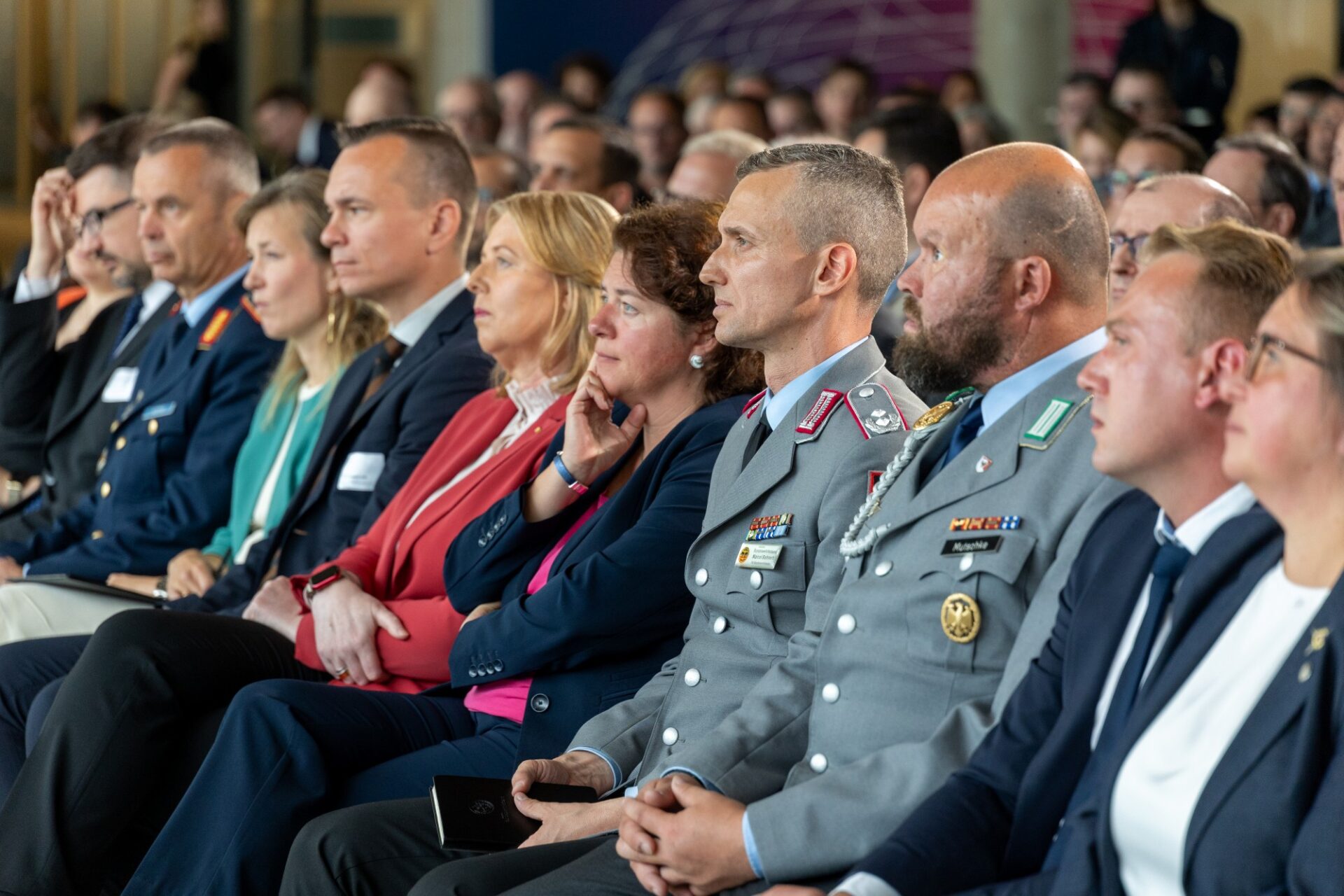
The “Round Table of Veterans”, where the most important actors of the national veteran movement regularly come together, decided at its session on May 9, 2026 to initiate the process of developing a common position on the topic. A possible goal currently considered is an initial awarding on Veteran Day 2028. Whether the Bundeswehr will ultimately introduce a wounded-soldier decoration remains open. The discussion should, however, be conducted broadly and the arguments weighed carefully against each other. Even such a process would demonstrate that the handling of injury, deployment consequences, and military recognition in Germany is visibly changing.
Author: Marcel Bohnert is a Lieutenant Colonel in the General Staff Service of the Bundeswehr.
