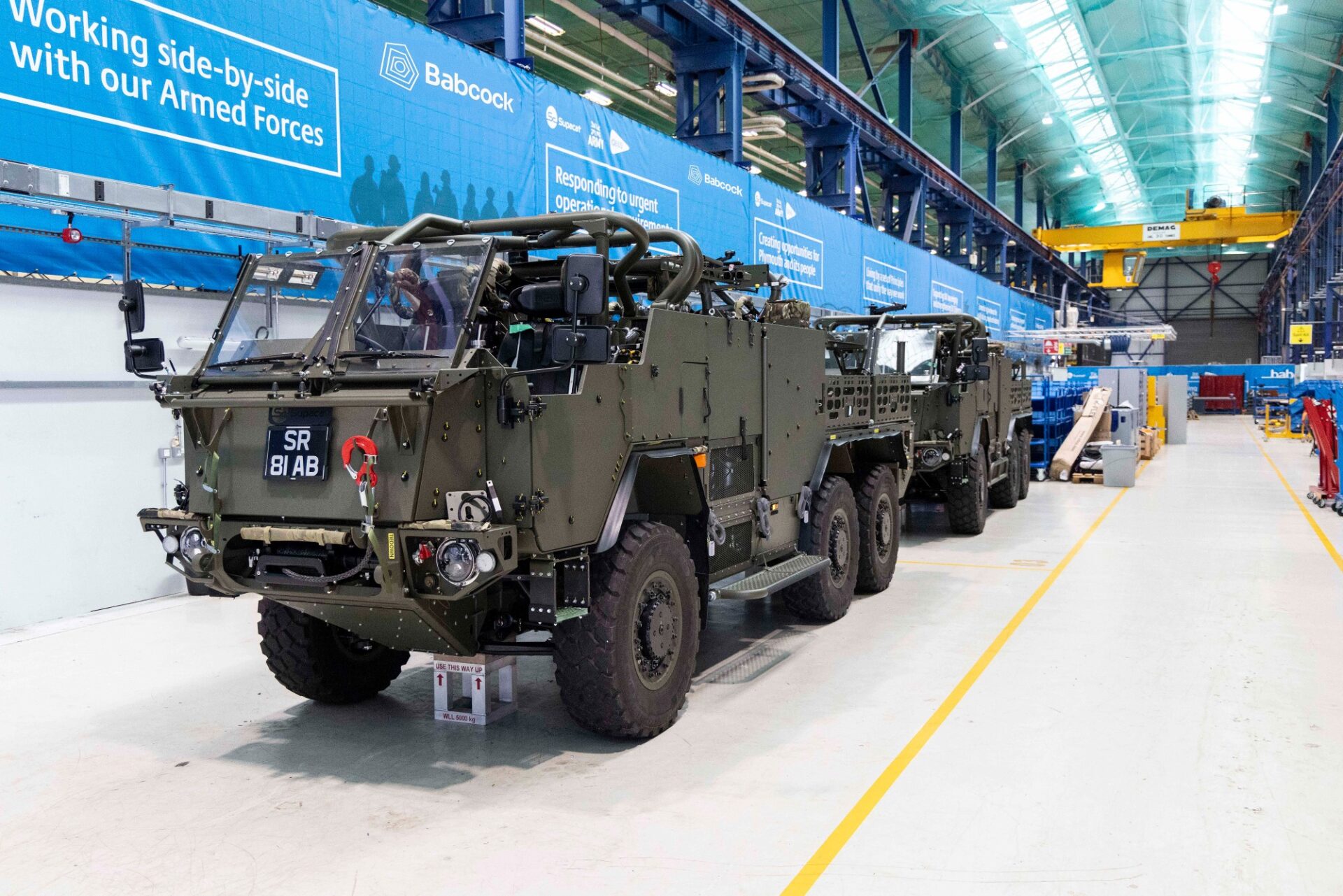
Babcock International and Supacat have completed the final tactical Jackal 3 vehicles from a contract for the British Army. This contract encompassed 123 4×4 models and three vehicles of the extended Extenda version with six wheels. The latter variant also included the final vehicle, which rolled off the line at Babcock in Devonport, as the company announced on Monday. It is now undergoing tests before it is officially handed over to the Army.
The Jackal High Mobility Transporters (HMT), developed by Supacat, is a versatile, highly mobile weapons platform that can be used for reconnaissance, patrols, and logistical tasks. It was originally developed in response to an urgent operational requirement of the British Army for Afghanistan. Later, the vehicle became an integral part of the Army’s ground operations and tactics. Jackal variants are used for long-range reconnaissance, rapid assault operations, fire support, and convoy protection.
The Czech Special Forces also receive the Jackal 3 Extenda
Babcock calls the Jackal the most versatile and capable vehicle in its class. According to Supacat, it has demonstrated its modularity and the ease of integrating mission-critical systems. The two companies had initially begun production of 70 Jackal 3 for the British Army in 2024. An expansion of the contract from September of the same year included the extended six-wheeled variant. The additional axle is intended to allow a greater payload while preserving off-road capability and a top speed of up to 120 km/h.
Among the Czech 601st Special Forces Group, 18 Jackal 3 Extenda replace the old Land Rovers. The order from September 2025 was the first export order for the vehicle. Previously, the series had been in use only with the British armed forces, with the exception of four vehicles loaned from Estonia for deployment in Mali. The 601st Special Forces Group received its current designation in 2003, but traces back to the paratroopers of Czechoslovakia established after World War II.
The original 71st Airborne Battalion initially continued the tradition of reconnaissance and sabotage missions of the wartime exile intelligence service. From 1952 onward, the unit followed as an airborne regiment or brigade of the Soviet airborne doctrine. In 1995 it was renamed the 6th Special Forces Brigade and in 2001 the 6th Special Forces Group. Beginning with Operation Desert Storm in Saudi Arabia, its members took part in numerous overseas missions.
