
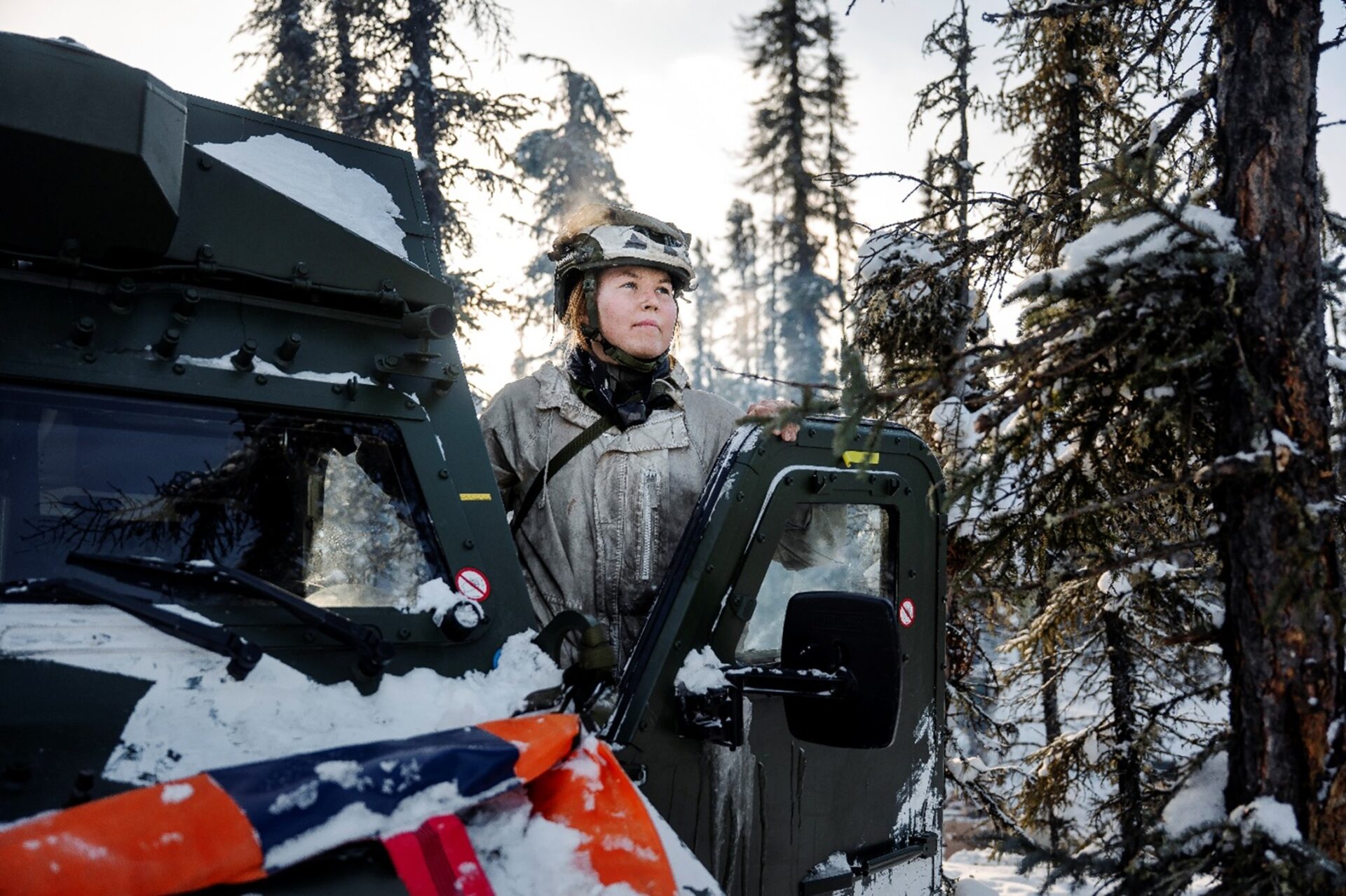
In February, a platoon of Swedish conscripts with their officers from the Dalregementet (I 13) in Falun took part in the JPMRC 26-02 exercise led by the United States in Alaska. The Joint Pacific Multinational Readiness Center–Alaska (JPMRC–AK) is a state-of-the-art combat training center of the U.S. Army in the Donnelly Training Area near Fort Greely. It serves to prepare for Arctic conditions and missions in the Indo-Pacific region.
Above all, the U.S. 11th Airborne Division (Arctic Angels) uses the center to demonstrate combat readiness under extreme cold. This unit also participated in JPMRC 26-02 at the beginning of 2026. It is the U.S. Army’s fourth combat training center and enables up to a large brigade-sized formation to train in a realistic, harsh environment.

The JPMRC 26-02 Exercise
“This exercise clearly shows that Sweden is not only a consumer of security provisions, but also possesses capabilities and can contribute—especially in this environment and at these latitudes, where we have unique capabilities that only a few other nations in the world possess,” said Major General and Chief of the Swedish Army, Jonny Lindfors.
Joint Pacific Multinational Readiness Center (JPMRC) 26-02 is the U.S. Army’s most important Arctic-focused exercise. It serves to prepare soldiers for large-scale combat operations (LSCO) in extremely cold climates. Under the leadership of the 11th U.S. Airborne Division, units from Sweden, Norway, Canada and other partners participated.
Why Alaska?
Geographically, Alaska links the Pacific and the Indo-Pacific with the Atlantic and the Arctic, forming a strategic unit for the region. “Here in the Arctic, our interests intersect with those of other nations,” says the Swedish Army Chief Jonny Lindfors. “This includes defense against Russia, competition with China and the protection of valuable installations and natural resources. Through our presence in Alaska, in Greenland and the Swedish Air Force in Iceland—while we are simultaneously conducting a large exercise in the Nordic Arctic—we send a clear signal: The Arctic is a priority area for both Sweden and the Alliance.”
It was decided early to send a conscript unit instead of professional soldiers: “We want to show the world our conscription system, with which we can train highly qualified soldiers in a short time, who with relatively short training can perform excellently in this environment,” says the Army Chief Jonny Lindfors.
The Deployment of Conscripts
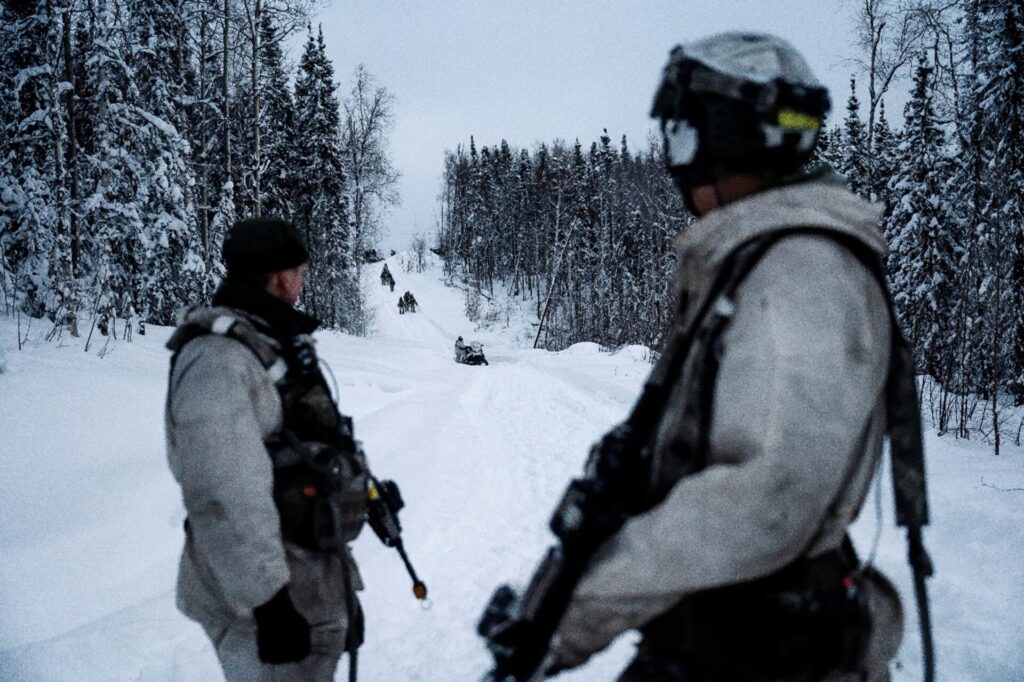
A company of the Dalregementet took part as an infantry platoon, subordinated to a brigade reconnaissance unit. The platoon was firmly integrated into the company and received its tasks from an American company commander. Its duties included, among other things, reconnaissance operations in rugged terrain as well as firefights. The platoon demonstrated excellent winter-operation capabilities and was highly valued for its performance in the exercise, according to the Swedish leadership.
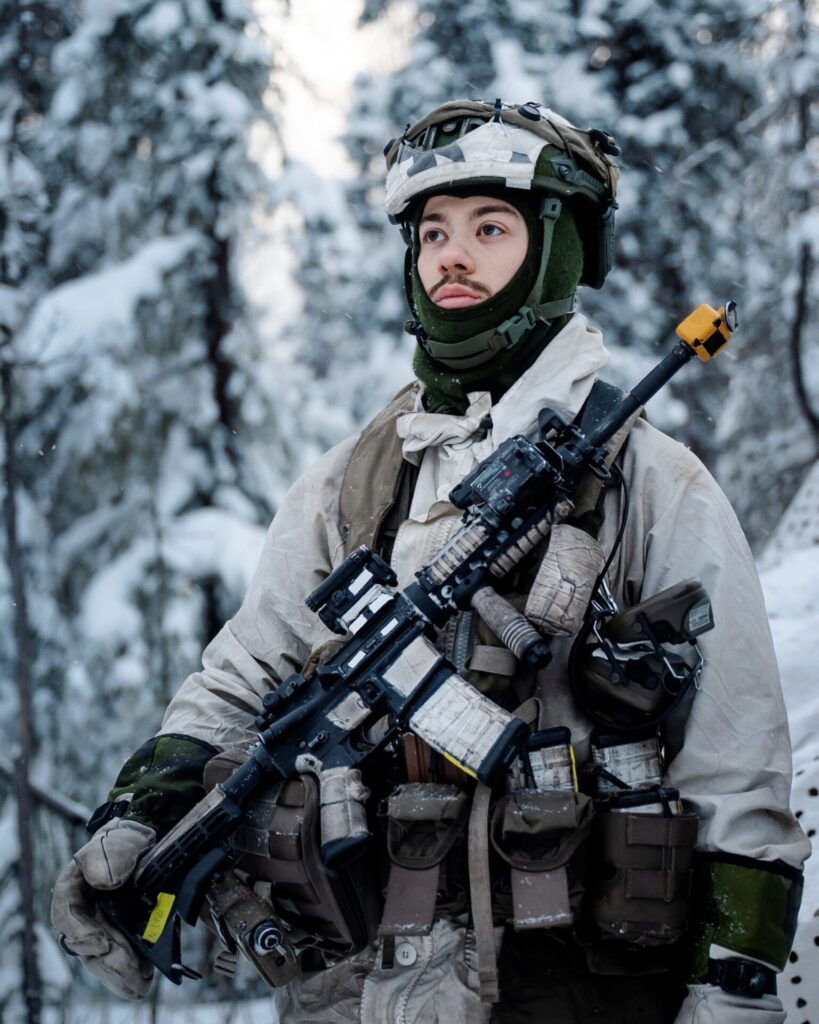
The conscripts impressed their American colleagues both with their attitude and their expertise: “The Americans can hardly fathom that the conscripts have completed little more than half of their service time and are already so good. Both with their positive attitude and with their skills in dealing with this environment,” said the Swedish regimental commander Ronny Modigs.
The Swedish Conscription System
The Swedish conscription system, reintroduced in 2017 after a pause, is a selective, gender-neutral compulsory service for Swedish citizens aged 18 and over. Each year, around 100,000 young people are screened through an online questionnaire and a selection process (with tests, medical examinations and interviews). Only about 8,000 to 10,000 are chosen for training – depending on military needs and individual suitability.
The service lasts 9 to 15 months and begins with a three-month basic military training, followed by role-specific training in areas such as combat, logistics or technical functions. Perhaps this system is a well-suited model for German considerations. Especially policymakers should look beyond their borders to develop suitable, non-clientelist security concepts.
