
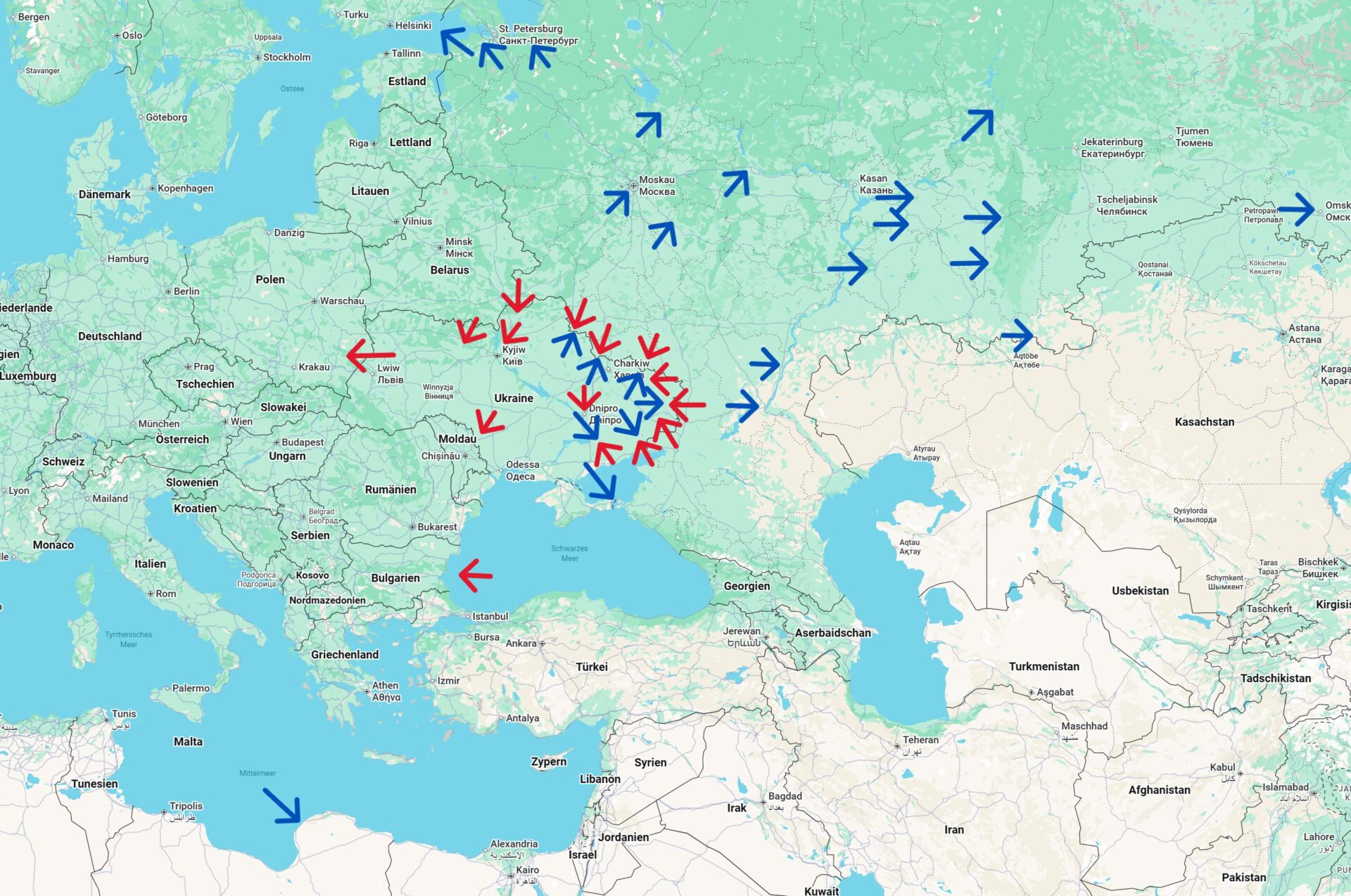
While the front lines in the war in Ukraine have moved only marginally in recent weeks and have largely been obscured by the drone-dominated “gray zone” between the two sides, headlines have recently been made mainly by attacks with unmanned systems outside their borders. In particular, both Russia and Ukraine continued their strikes against maritime targets with air and sea drones. Additionally, the impact of three Russian missiles in the NATO member Poland caused a stir.
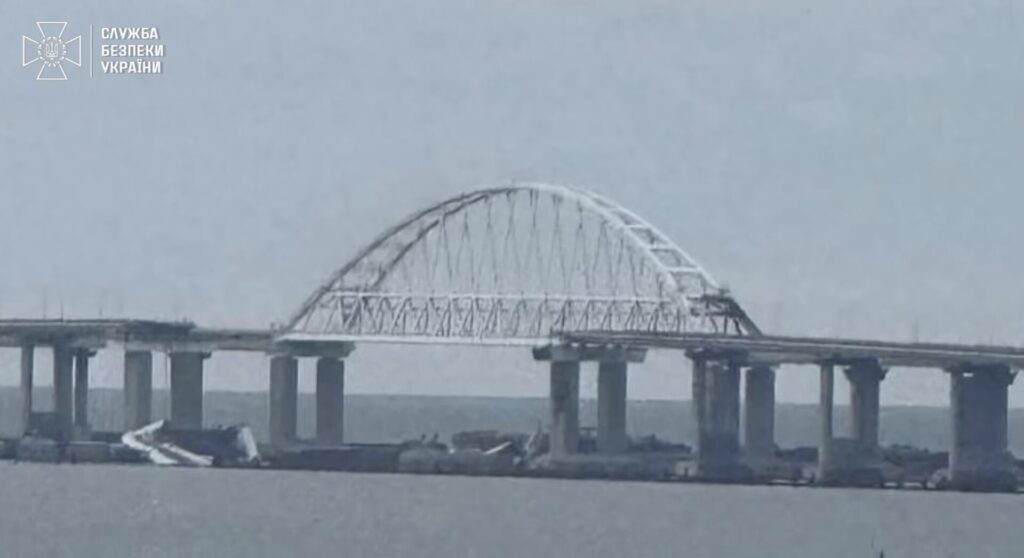
Not least, Ukraine managed in two consecutive nights on 16 and 17 November after a lengthy preparation by disabling air defense and jamming systems to achieve a prestigious success against the bridge over the Kerch Strait, connecting the Russian mainland with Crimea. With the mass deployment of drones and cruise missiles, including up to ten heavy Flamingo missiles, it managed to bring down a bridge arch along with a road segment.

Although rail and road traffic over the bridge had already been restricted after numerous earlier attempts, train service could be resumed after a short period. Additionally, the supply of Crimea currently plays only a secondary military role, since the Russian Black Sea Fleet had to abandon its main base in Sevastopol due to repeated Ukrainian attacks in the second year of the war. The bridge, however, had become a symbol of the Russian occupation.
Russian Strikes in the Black Sea, Ukrainian in the Baltic
The partial collapse also temporarily blocks the Kerch Strait passage between the Azov Sea and the Black Sea for ships. The sea area remains dangerous anyway due to the drone warfare: Parallel to the attacks on the bridge, Russia recorded two further hits against merchant ships on the route to the Ukrainian port city of Odessa in the western Black Sea. A Liberian-flagged guest tanker and a Somali-flagged grain carrier sank; the crews were rescued.
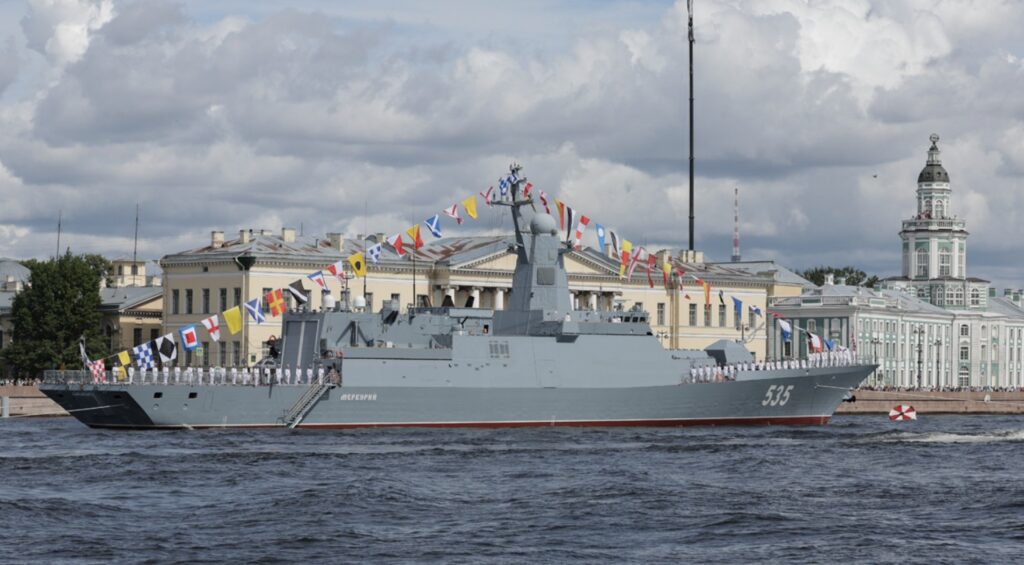
Conversely, Ukraine struck Russian ships in the Baltic Sea. As early as 11 November, the missile corvette Naro-Fominsk in the Gulf of Finland off St. Petersburg was damaged; last Saturday the cargo ship Sparta II in the same area, en route to Kaliningrad, caught fire. After engine failure and evacuation of the crew, the ship drifted into Finnish waters and was subsequently towed toward Russia. Reports said that on the same day the railway ferry Ambal was also hit.
Representatives of NATO member states then stated that the Baltic Sea should not become a war zone – a somewhat belated wish in light of the alleged 2022 Ukrainian command-led explosion of the Nord Stream pipelines and numerous allegedly Russian sabotage actions against underwater cables there. As after earlier drone attacks on St. Petersburg and surroundings, pro-Russian propaganda channels aimed at Western audiences anyway accused the Baltic states and Poland of at least supporting this by tolerating overflights in their airspace.
Einschläge russischer Marschflugkörper in Polen
Russian military bloggers pointed out in response that this was not necessary given the range of current drone models. Also on 11 November Ukraine carried out an attack on an oil refinery in Omsk, Siberia, about 2,500 kilometers from the current front line. Another persistent accusation is, however, that Ukrainian successes such as the strike against the Crimea bridge are enabled by Western intelligence data.
The impact of three Russian cruise missiles of the Ch-101 type last Friday near a training area where troops of the “Coalition of the Willing” trained for a possible deployment to Ukraine after a ceasefire is interpreted by some as Moscow’s demonstrative reaction to this. Lately, however, Ukraine again dominated headlines with the sinking of a Russian Corvette of the Steregushchi class and a Maltese-flagged cargo ship, which supposedly carried Russian weapons, off Benghazi, Libya.
Although this is presumably not the first Ukrainian operation of this kind in the Mediterranean, after in March the Russian LNG tanker Arctic Metagaz exploded in the same sea area and in May a Ukrainian sea drone loaded with explosives was discovered near the Greek island of Lefkada. In the present case, however, Ukraine officially confirmed it, stating that the seven used sea drones had been brought to the area of operation by a mothership.
Drone War in the Mediterranean
Conversely, both Russian and Western sources report that since the beginning of the year Ukraine has established a drone base in Latakia, controlled by the Libyan government recognized by the international community. Benghazi is controlled by the eastern Libyan rival government under General Khalifa Haftar and serves as a base for supplying Russian-supported groups and governments in Africa with weapons. The now-sunk corvette Merkuri and the cargo ship Angara reportedly belonged to a corresponding convoy, according to Ukrainian statements.
Both Libyan governments reaffirm their official neutrality in the Ukraine war and warned after the attacks about the dangers of foreign military presence in the country for national sovereignty, which presumably referred to the other side. From international law, several sources noted that ships of a belligerent power may only stay in neutral ports for 24 hours before they become a legitimate target, and the Merkuri had already been in Benghazi for several days for resupply.
On land, Russia has not fared well recently either: According to available reports from both sides, its forces in Ukraine have not made major progress. At Burluk in the northeast of the front, the attempt to encircle Ukrainian troops remains incomplete. Ukraine even reported successful counterattacks, which were denied by the Russian side. By contrast, Russian military bloggers admitted territorial losses at the border between the Zaporizhzhia and Dnipropetrovsk oblasts and near the town of Lyman in the east.
First Deployment of Lynx Infantry Fighting Vehicles in the Ukraine War
Ukraine again reported for the first time the deployment of Lynx infantry fighting vehicles supplied from Germany, whose 30-mm autocannon with programmable ammunition proved effective even against drones. Meanwhile, a new round of negotiations between the two sides with the involvement of the USA in Abu Dhabi ended without results other than another prisoner exchange. The US President, Donald Trump, battered after the American midterm elections, has according to Ukrainian sources once again called for an early end to the war, this time by next January.
Shortly before the midterms he had also announced a major agreement with Russia on the entire future security architecture in Europe. Given his weakened position, the unchanged Russian demand for a broad rollback of NATO to the 1997 level, and European reluctance to permit this, both plans are unlikely to have much prospect of success.
