
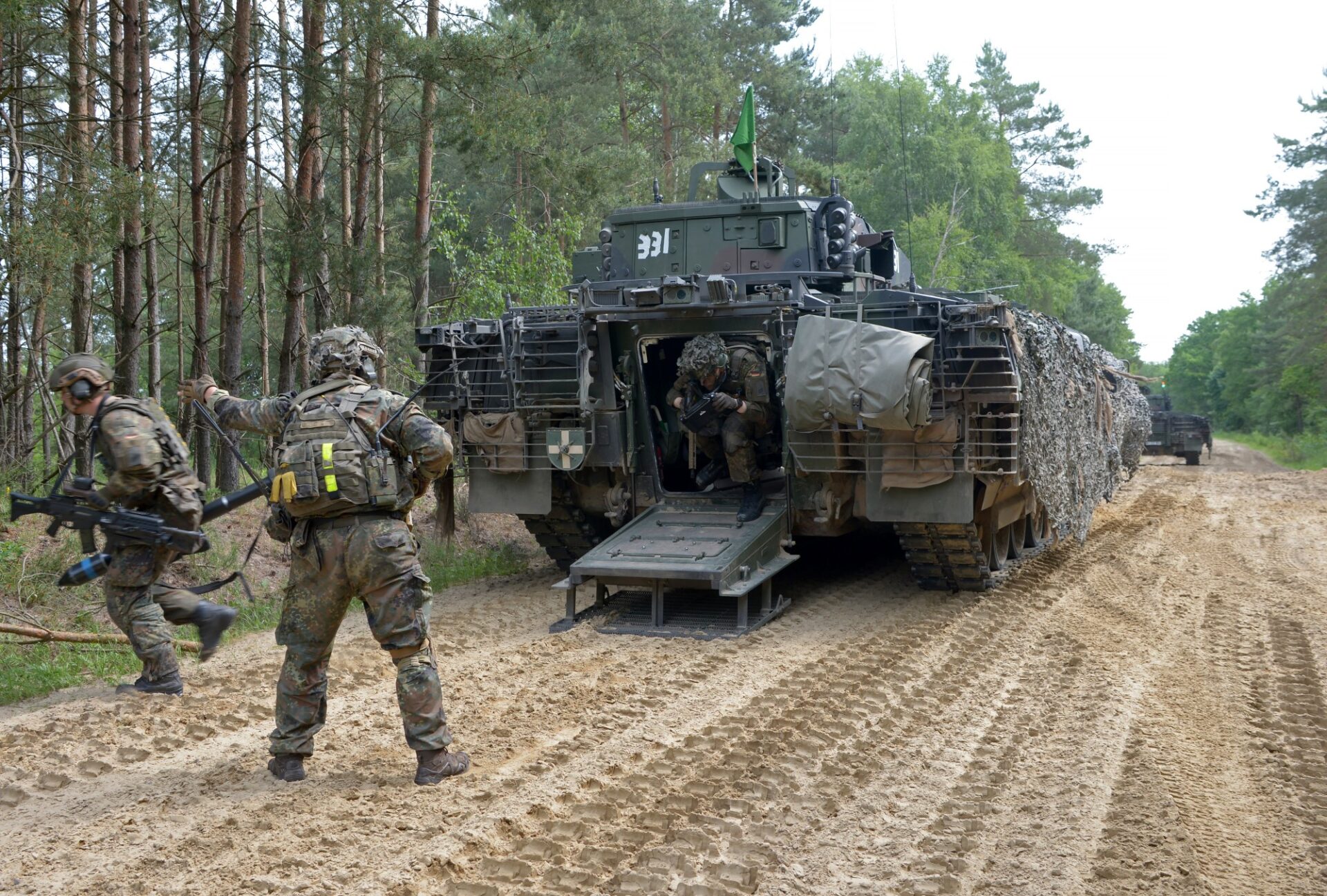
The Panzergrenadier Brigade 37 has, since January 2025, been designated as a rapidly deployable Multinational Brigade Lithuania for NATO missions in the Baltic region. This mission requires the highest level of readiness and combat strength – at all times and with whatever assets are available. To enable this so-called “fight tonight” capability, the brigade has in recent weeks deployed with up to 3,000 soldiers as well as 800 wheeled and tracked vehicles to the Bergen training area in Lower Saxony, where it trained for the real contingency.
The Panzergrenadier Brigade 37 “Freistaat Sachsen” is reliable. It has already proven this in numerous overseas and aid missions of the Bundeswehr. As the NATO Response Force (NRF) it was even the lead formation of the multinational land components of the NRF and commanded up to 12,000 soldiers from nine nations. Since January 2025 it is again planned for a NATO assignment – this time as Multinational Brigade Lithuania.

With this, she is the most ready-to-operate and fastest-deployable unit of the German Army, should there be an alliance emergency on the NATO eastern flank. Until the completion of the buildup of Panzerbrigade 45 in Lithuania, she makes a significant contribution to deterring any aggression against the alliance territory and thus directly to the protection of Lithuania. But collective defense is national defense, and protecting Lithuania is also protecting Germany.
Wettiner Heide Exercise in Bergen
And thus the female and male soldiers from Bavaria, North Rhine-Westphalia, Saxony, Thuringia and other federal states are in the Baltic region to defend their homeland. A privilege and a burden at the same time, especially against the background of a demanding and rapidly changing battlefield. To meet these demands with resolve, continuous, realistic and high-quality training and further education of all soldiers is at the forefront. As in this year’s exercise Wettiner Heide.
Up to 3,000 soldiers from all units of the brigade and their support personnel trained at the Bergen training area in Lower Saxony. Among the up to 800 vehicles were the PzH 2000, the Puma infantry fighting vehicle, and the Leopard 2A7V battle tank. The exercise portfolio ranged from rail-transport deployment and unloading under the protection of homeland security, through combat service in various levels of difficulty, live fire of all main weapon systems, to command post processes as well as the testing and further development of the brigade’s leadership capabilities.
Mechanized Infantry Deepen Capabilities
Strengths must be strengthened, weaknesses weakened. In a blend of battalion-owned training with simultaneous networking in the so-called “System Brigade,” during the Wettiner Heide exercise training topics were deepened, the ability to fight was further strengthened especially through firing exercises, capabilities in the areas of leadership – reconnaissance – effect and support were reinforced, processes deepened and new things tested.
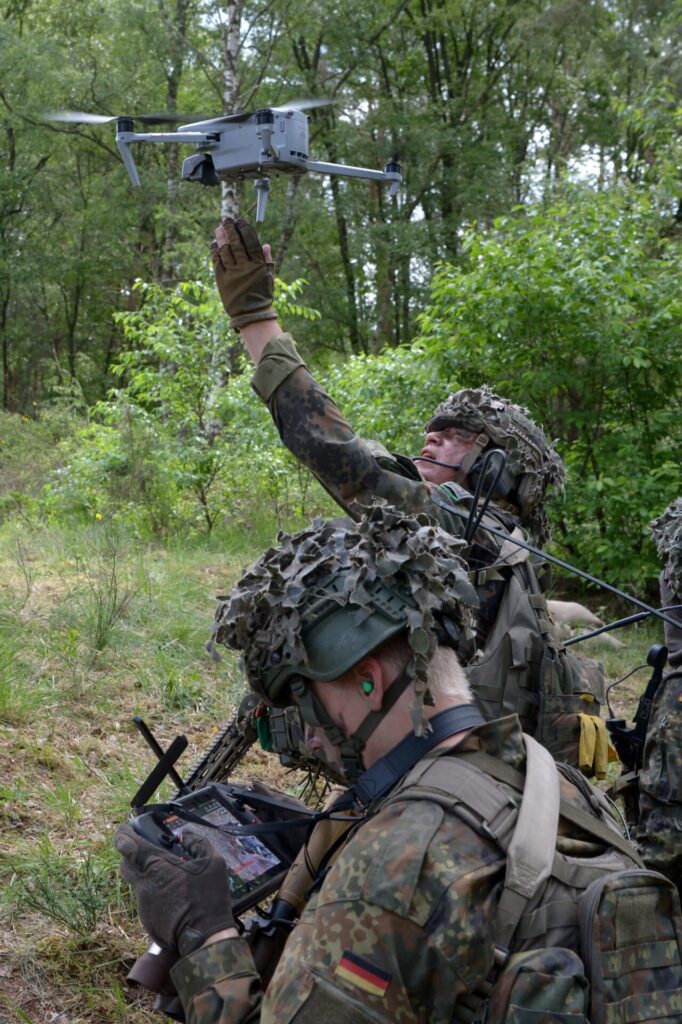
In the framework of a centrally conducted training for the brigade’s leadership on the topic “Reconnaissance and Effect Complex,” the emphasis was on the interoperability and networking of reconnaissance forces with capabilities of indirect tactical fire support. “The effect is not achieved by technology alone. It depends on the soldiers with the right training and the right mindset,” summarizes Brigade Commander Colonel Hagen Ruppelt.
And all this is present in his brigade. Already through the NRF assignment, the Central German brigade has gained a rich reservoir of experience. It solidifies and develops this continuously. Assertiveness, a drive for innovation and, above all, professionalism as well as quality define the Panzergrenadier Brigade 37. It is ready: ready for the “fight tonight” – ready for the assignment as Multinational Brigade Lithuania.
