
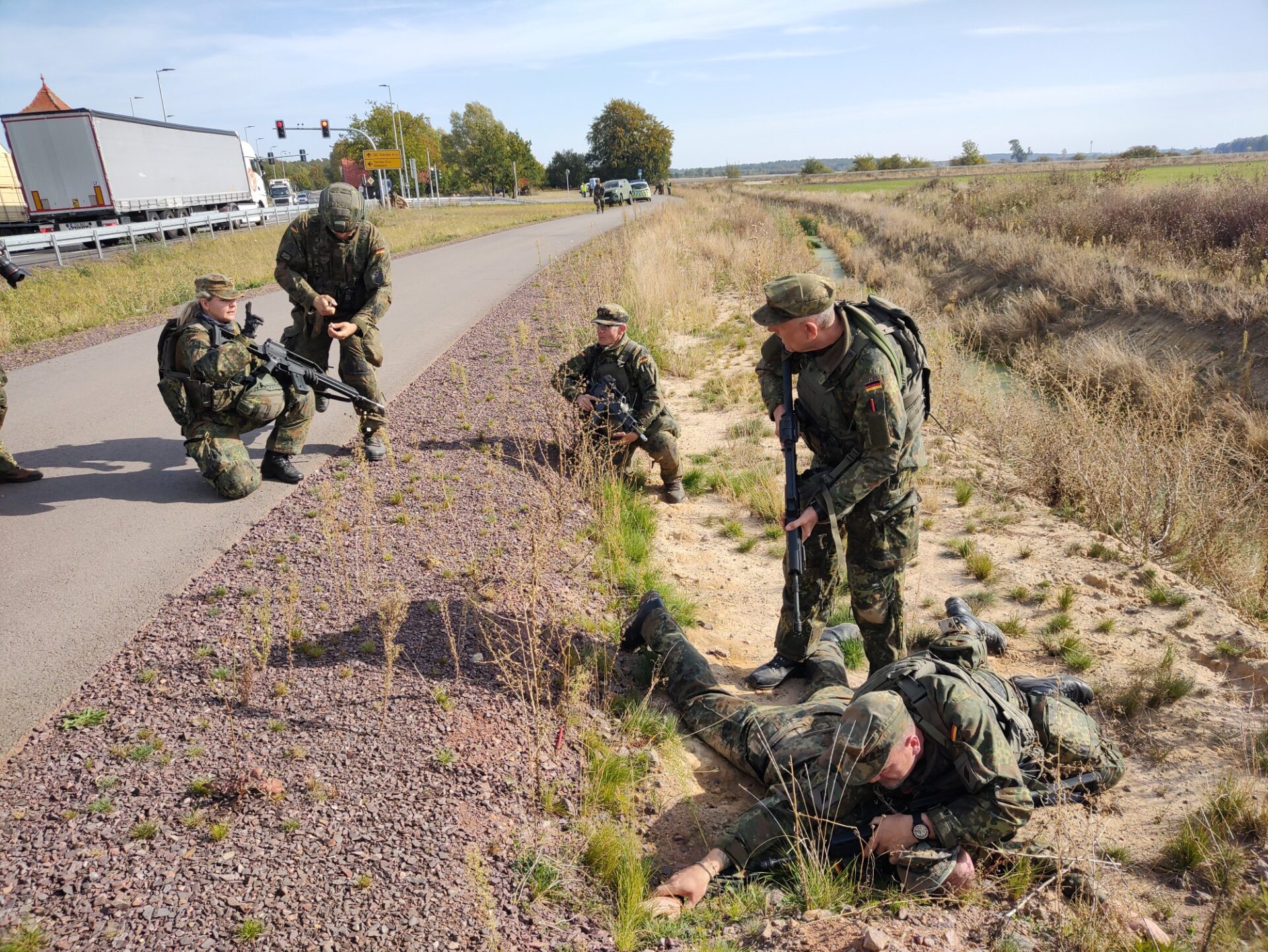
Last Friday the two-week exercise Vigilant Roland II of the Homeland Protection Division came to a close. While the preceding event in May took place on Bundeswehr grounds in Bavaria, Hesse and Lower Saxony, this time a total of 450 soldiers of the Homeland Defence Regiments 4 and 6 trained in the public space of the states of Saxony-Anhalt and Rhineland-Palatinate. This included the A14 near Stendal, where 140 members of Homeland Defence Regiment 4 practiced securing a highway bridge.
On Tuesday the Bundeswehr showcased the training at several stations around the objective, where the deployed soldiers must react to sudden situations. At an alarm post that monitors an intersection near the bridge, they are confronted with a car accident: a four-man Wolf reconnaissance vehicle has crashed into a tree. The first challenge is always to recognize the event as part of the exercise – for obvious reasons the accident takes place without an actual tree, and the security personnel are only alerted after a prolonged horn blast.
Civilian expertise comes into play in accident situations
Fortunately for them, the relief is taking place at the alarm post, so more soldiers are on site. Among them is even a professional emergency medical technician, who is not being used as such here. Stefan, a senior staff sergeant, is professionally involved in training himself; his civilian qualification, however, is not recognized by the Bundeswehr, as he says. The much-debated problem that reservists in a crisis already fill another critical role does not initially apply in his case. The beneficiaries are now his comrades, who profit from his expertise.
Of the four exercise casualties, two have only minor injuries, one is more seriously injured but responsive. A female soldier is unconscious with a head injury. The security forces, who also have to fulfill their primary mission, stop traffic on the road, promptly request the Quick Reaction Force (QRF) of the company after the first report, evacuate the accident victims from their vehicle, and begin first aid measures, critically observed by the exercise leader “Major Tom” and his staff.
Multiple demands well handled
In the meantime, the accident vehicle begins to burn as a simulation, and the injured must be cared for at a safe distance. Four soldiers of the QRF arrive in a VW Amarok and reinforce the forces in their parallel tasks. As is not unusual in rural regions, it takes quite a while for a civilian ambulance and an emergency physician vehicle from the Arbeiter-Samariter-Bund (ASB) with a three-person crew to arrive and take over the injured. “Major Tom” is satisfied: the soldiers have handled the multiple demands well.
He has only two suggestions for improvement: the deployed platoon commander could have requested the help of his platoon leader along with the radio operator to relieve the communications burden from the chain of command, though the platoon leader could have decided this himself as well. And even in a crisis situation, the soldiers could have dialed the emergency number on their mobile phones in parallel with reporting to superiors to accelerate the response. For even in tense and defensive situations, civil emergency services must continue to function.
Espionage attempt in the parking lot
A few kilometers further, other female and male soldiers secure another intersection near a village. The exercise scenario here: opposing forces want to spy on the Bundeswehr mission. It was announced that they would appear as civilians with red armbands. Instead, they themselves appear in Bundeswehr uniform, pretend to be members of another Homeland Defence regiment, and attempt to engage the group leader in a discussion about the deployment. She grows suspicious and has the two men checked more closely by her soldiers.
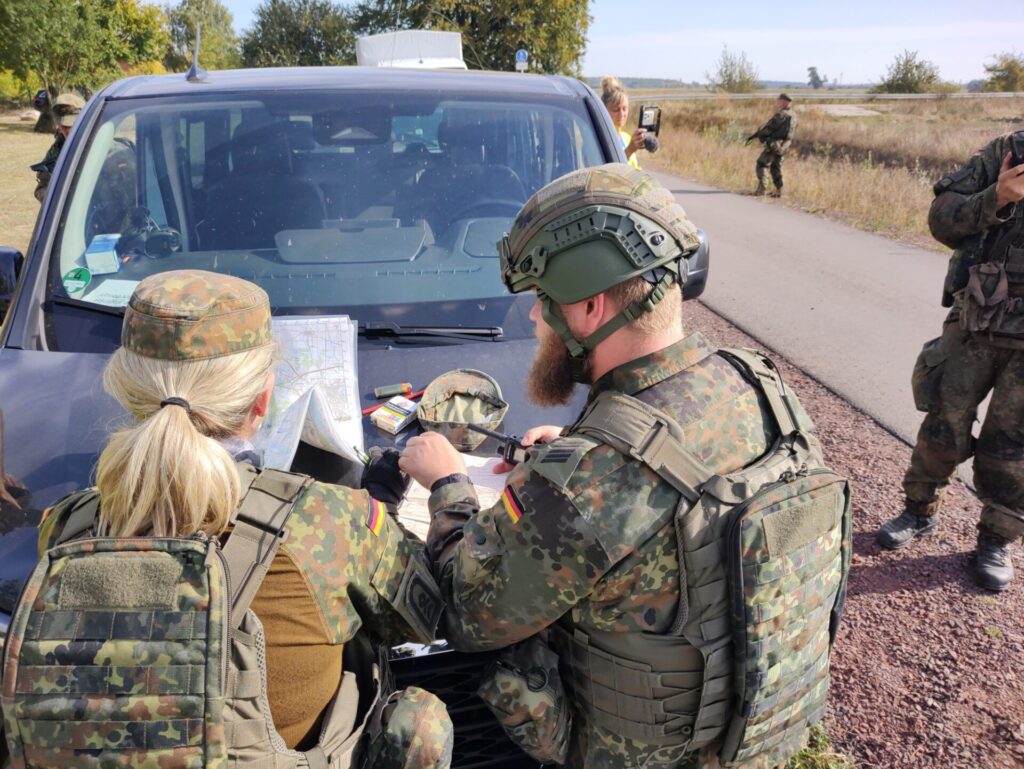
Drone pilots not the last thing Vigilant Roland II watches for
In the final exercise scenario of the media briefing, the opposing scouts actually deploy a drone to scout the forces around the highway bridge this time. Their awareness is high: within ten minutes they have detected the drone, located the launch position, and the QRF along with the company commander arrives in three Amaroks. The tension on the now third day of the exercise with deliberately consecutive stress situations also leads to mistakes. Focusing on the two drone pilots standing openly on the field path, the forces initially overlook the two other men in a parked vehicle to the side.
The situation escalates into longer discussions. The pilots claim they are only testing their new toy and cannot yet handle it properly, as the soldiers order them to land it. The two other men have locked themselves in the vehicle and refuse to get out. The attempt to open the doors from the outside escalates. The passenger pulls a pistol and becomes a victim of a gunfight. The situation remains tense but under control until Major Tom interrupts the exercise. He praises the quick reaction, but criticizes the too-rapid approach at the scene with inadequate personal protection and handling of the suspects.
Participants in the exercise engage with the action
The exercise participants visibly immerse themselves in the action. In the previously described simulated car crash, the driver of the Wolf had delivered an impressive portrayal of a victim in shock, who first worries about his unconscious comrade, then about his own planned vacation. Beside the roadside ditch, the staged scout and the soldiers who are holding him engage in a vigorous struggle until the exercise leader Tom declares the situation resolved. The debriefing accordingly proves to be lively.
The Major offers both praise and critique: instead of asking for the soldiers’ IDs, one could have asked the suspects for the current code word. What was appropriate, however, was not to shoot at the fleeing individuals in a targeted manner. The escaped scout would probably not have gotten far across open ground anyway. Here too, it remains true that in the end, after immediate danger mitigation, the police as civilian authorities are responsible for crimes such as espionage. Even in a state of tension and defense, the legal and constitutional order remains unchanged.
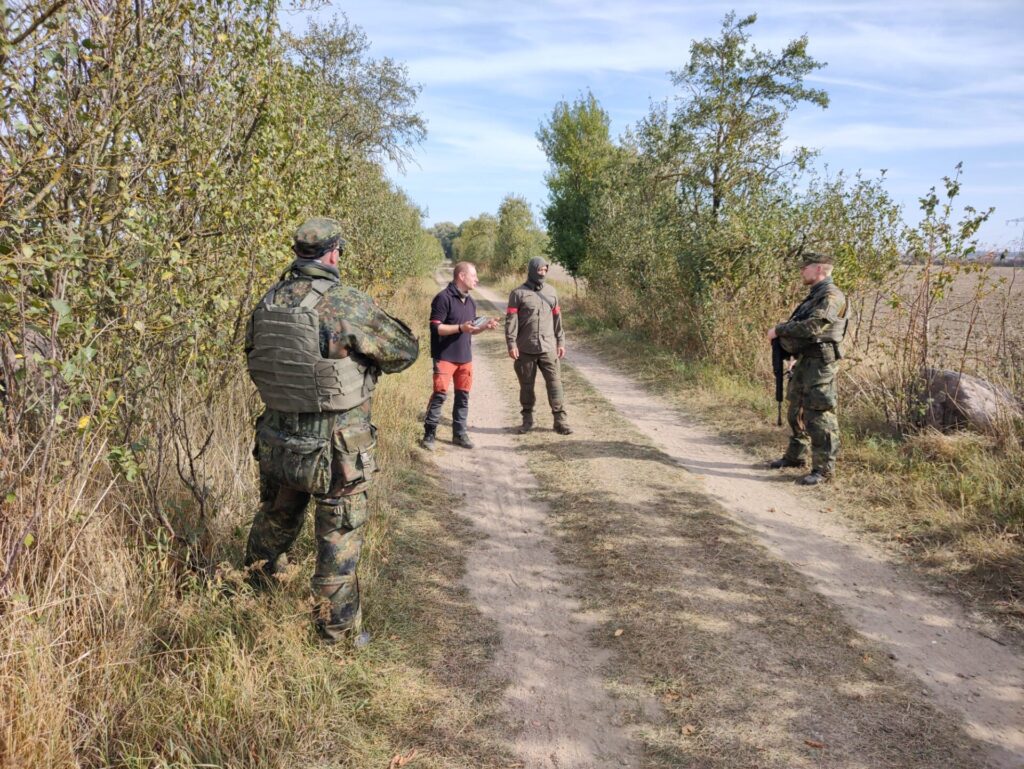
Vigilant Roland II will not be the last Homeland Defense exercise
In the final training scenario shown to the media, opposing scouts actually have a drone take off to scout the forces around the highway bridge this time. Their awareness is high: within ten minutes they have identified the drone, located the takeoff position, and the QRF along with the company commander arrives in three Amaroks. The tension on the now third day of the exercise, with deliberately dense successive stress situations, nevertheless also leads to mistakes. Focusing on the two drone pilots standing openly on the field path, the forces initially overlook the two other men in a parked vehicle to the side.
The situation degenerates into longer discussions. The pilots claim they are only testing their new toy and have not yet learned to handle it properly, as the soldiers order them to land it. The two other men have locked themselves in the vehicle and refuse to exit. The attempt to open the doors from the outside escalates. The front-seat passenger draws a pistol and becomes a casualty of a shootout. The situation remains tense but under control until “Major Tom” interrupts the exercise. He praises the quick reaction but criticizes the too-rapid action at the scene with inadequate personal protection and the handling of the suspects.
The need for further training is thus evident, especially since the homeland defense force, which is predominantly made up of reservists, has to operate under the principle of “double voluntariness”: both the individual reservist and their employer must consent to an exercise. Not everyone who is scheduled therefore participates at a given time. The result is that, typically, units are not complete, but are filled with the available personnel, some of whom have never met each other. A shortcoming that the homeland defenders have so far compensated for, as with Vigilant Roland II, with noticeable commitment.
