
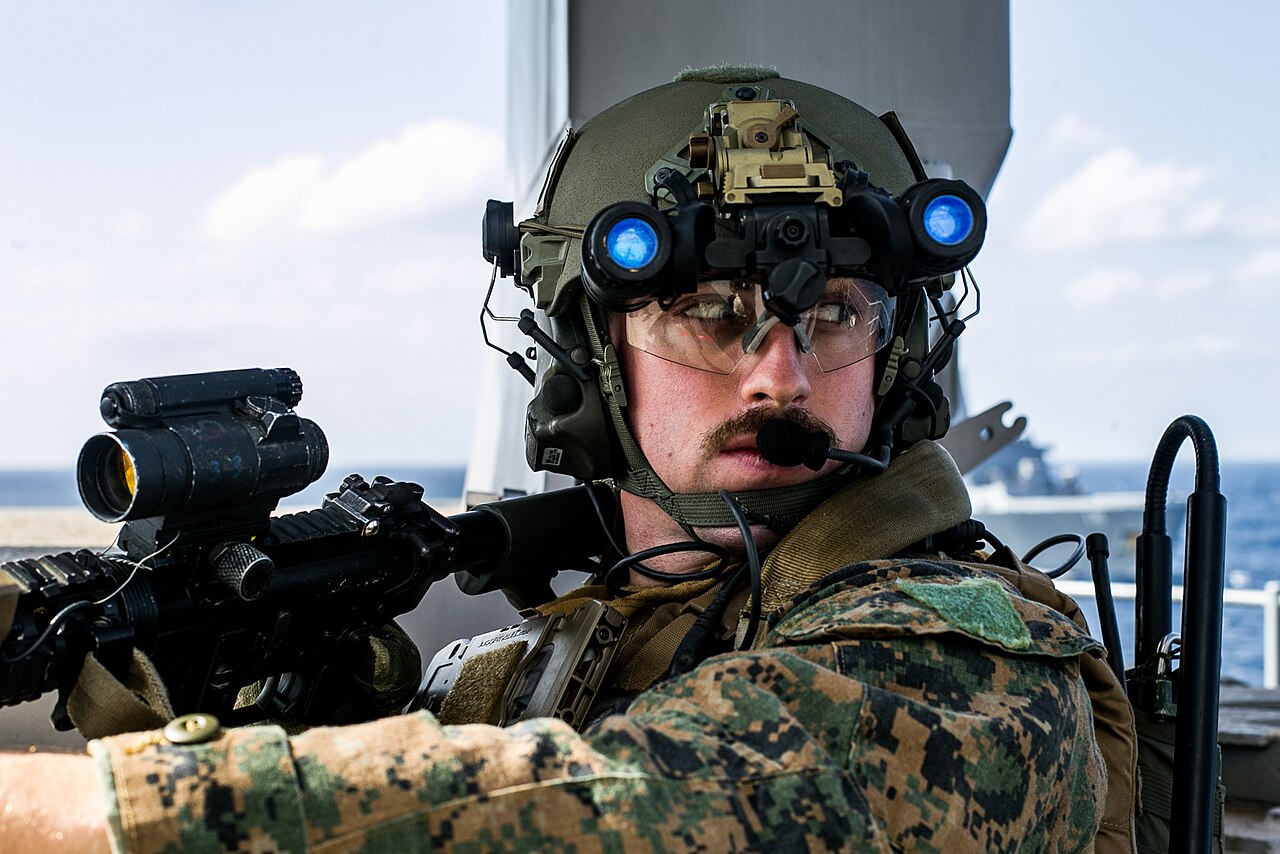
The U.S. Marine Corps (USMC) is reorganizing its reconnaissance training as part of its Force Design reform. On April 27, the first Ground Reconnaissance Course began at the Reconnaissance Training Company in Camp Pendleton, California. Together with the Amphibious Reconnaissance Course, this replaces the former Basic Reconnaissance Course for Marines who are deployed to Scout or Reconnaissance teams of the ground elements of Marine Air-Ground Task Forces (MAGTF).
At the same time, the preceding Marine Combat Training for candidates with non-infantry backgrounds is being replaced by the general Infantry Rifleman Course to shorten wait times and better prepare non-infantry Marines for the demands of reconnaissance training. The new Ground Reconnaissance Course will then include theoretical and practical components in land navigation, water survival, communication, surveillance, patrols and fire support.
USMC weighs primary use as Scout
The Amphibious Reconnaissance Course builds on planning and execution of amphibious operations, including the use of specialized communications and sensor equipment. At the end of the training, the Military Occupational Specialty (MOS) 0321 “Reconnaissance Marine” is earned. It is also being considered to make the MOS 0315 “Scout” into a primary designation such as machine gunner (MG) or mortar gunner. So far this has been a secondary designation for Marines who form the Scout detachments within infantry or light armored reconnaissance units.
These 26-member squads have replaced since 2023 the Marines’ former Scout-Sniper units with MOS 0317. Unlike the three Reconnaissance Battalions located at division level, which conduct amphibious and long-range reconnaissance and, to a limited extent, kinetic special operations, they directly support their battalion on the battlefield. If the Scout MOS becomes a primary specialty, the training would presumably partially overlap with that for Recon Marines.
In any case, drones will play a bigger role for the Marines’ reconnaissance troops in the future. In addition to surveillance tasks, the Marine Corps aims to use the First-Person-View (FPV) drones—which have gained prominence largely due to the Ukraine war— across the board also for direct actions against opponents. Since October of last year, the number of such devices in inventory at the Weapons Training Battalion in Quantico, Virginia, has risen from zero to 3,500. There are now six different training programs for their use, open to Marines with all MOS.
