Claims that outpaced the evidence
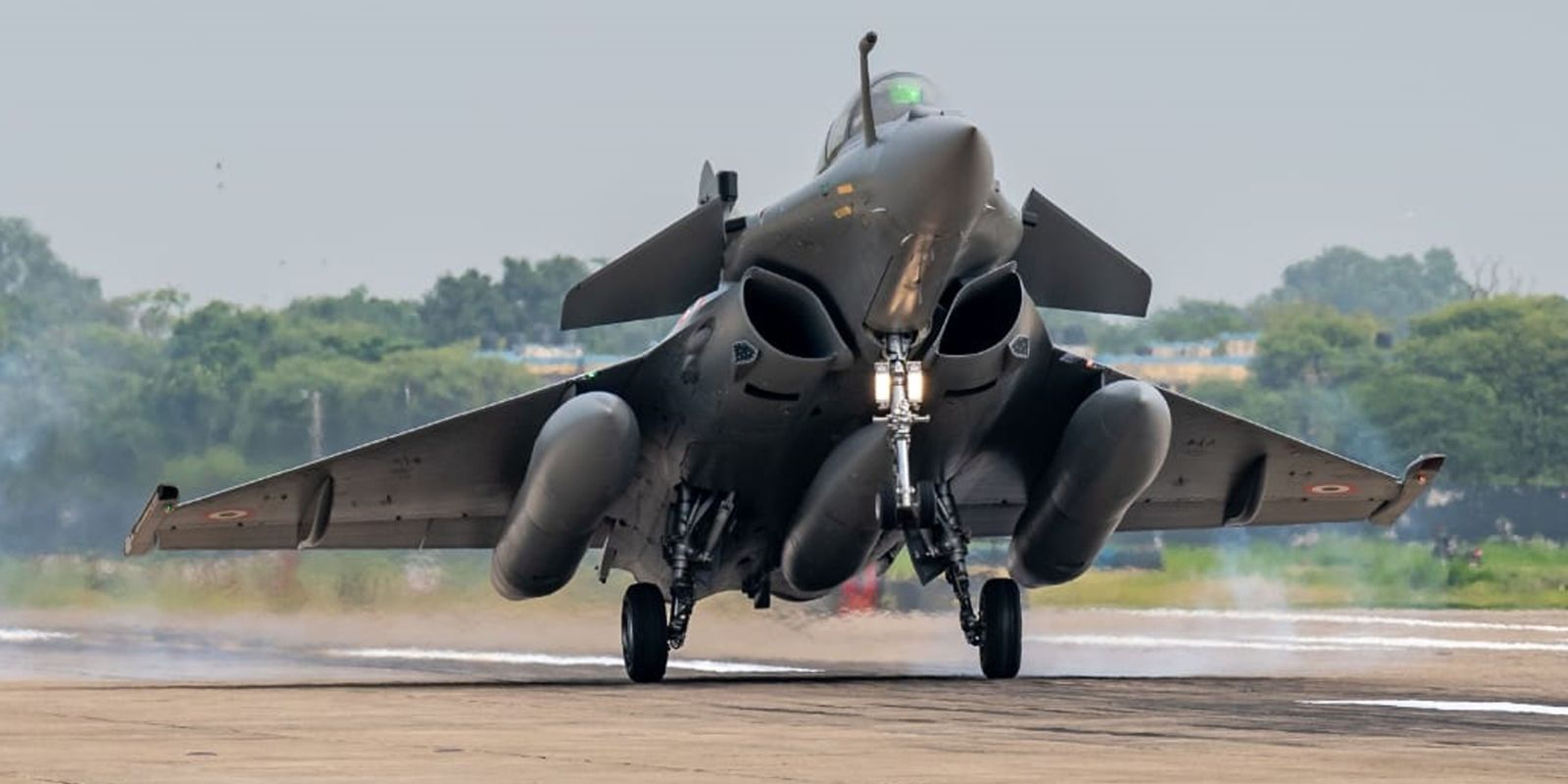
On 16 September 2025, Pakistan Air Force spokespersons made a sweeping announcement: four Indian Rafale EH fighters were reportedly shot down during May’s Operation Sindoor. The claim arrived with unusual precision, naming individual serials in a bid to project credibility. Within hours, however, independent observers began finding contradictions that undermined the headline narrative.
At face value, the story sounded decisive and technologically impressive. Pakistan’s briefers credited Chinese-made PL-15 air-to-air missiles, an assertion aligned with Beijing’s marketing ambitions. But hard timelines and publicly available imagery soon told a different story.
Serial numbers that don’t lie
The statement pinpointed four Rafale airframes: BS002, BS021, BS022, and BS027. That specificity was meant to convey transparency, yet it quickly became a self-inflicted trap. Two of those jets—BS021 and BS027—were documented flying in early September at the multinational Desert Knight exercise. They trained alongside the United Arab Emirates Air Force and the French Air and Space Force.
Photographs and exercise notes placed those airframes squarely in service, weeks after their alleged destruction. If BS021 and BS027 flew in September, they were not shot down in May. The logic is simple, the discrepancy fatal to the original claim.
The fog around BS001 and BS002
Complicating matters, most open-source assessments point to BS001—rather than BS002—as the likely Rafale loss from Sindoor. Reports indicate a Rafale returned close to base before the pilot ejected, an outcome consistent with a heavily damaged but still flyable aircraft. Pakistan’s assertion that it analyzed BS001’s debris is hard to square with accounts placing the wreckage inside India and quickly recovered by Indian teams.
BS002 remains a question mark, appearing in official Pakistani lists but lacking independent corroboration. Meanwhile, BS022 has left a light footprint, with no reliable sighting since May and uncertain participation in the operation. Absence of evidence is not evidence of loss, and caution is the professional default here.
Why push the story now?
Two strategic incentives loom large. First, the Rafale’s growing reputation in South Asia unsettles Pakistani defense planners. Second, PL-15 export and prestige messaging benefit from dramatic, media-ready narratives about kills against top-tier Western fighters.
There is also a procurement angle. Senior Indian Air Force leadership has formally asked for 114 additional Rafales, a move with major regional implications. Casting doubt on the jet’s combat record could, in theory, slow political momentum or sway public opinion.
What the data actually supports
The most defensible picture, based on open-source material and exercise records, looks like this:
- BS001: widely regarded as the Rafale lost during Sindoor; pilot survived.
- BS002: claimed by Pakistan; no independent confirmation to date.
- BS021 and BS027: photographed and reported active at Desert Knight in early September.
- BS022: uncertain status; no verified post-May sightings, but no proof of loss.
“Extraordinary claims demand ordinary proofs—dates, serials, and photos,” an aviation analyst quipped. “If an airframe is photographed at an international exercise, it wasn’t a wreck four months earlier.”
Implications for capability and credibility
If a Rafale could limp home under fire and save its pilot, that showcases notable survivability. It also blunts efforts to present the PL-15 as an unbeatable silver bullet against advanced Western fighters. Survivability narratives matter, not only for pilot morale but also for fleet sustainment and strategic deterrence.
Information warfare has its own physics. Details that seem to add weight can instead expose a story’s seams. Listing serials felt like a bold stroke; it ultimately made the tale easy to unravel.
Bottom line
Parts of Pakistan’s account do not withstand basic verification, especially regarding BS021 and BS027. One Rafale loss appears credible, with the pilot recovered and the aircraft likely BS001. Beyond that, the record is thin, and the case for four kills remains unproven.
In a contested information space, credibility is a reusable weapon. The simplest test—who can align claims with dates, photos, and serials—still favors the boring work of verification over the thrill of a headline.
