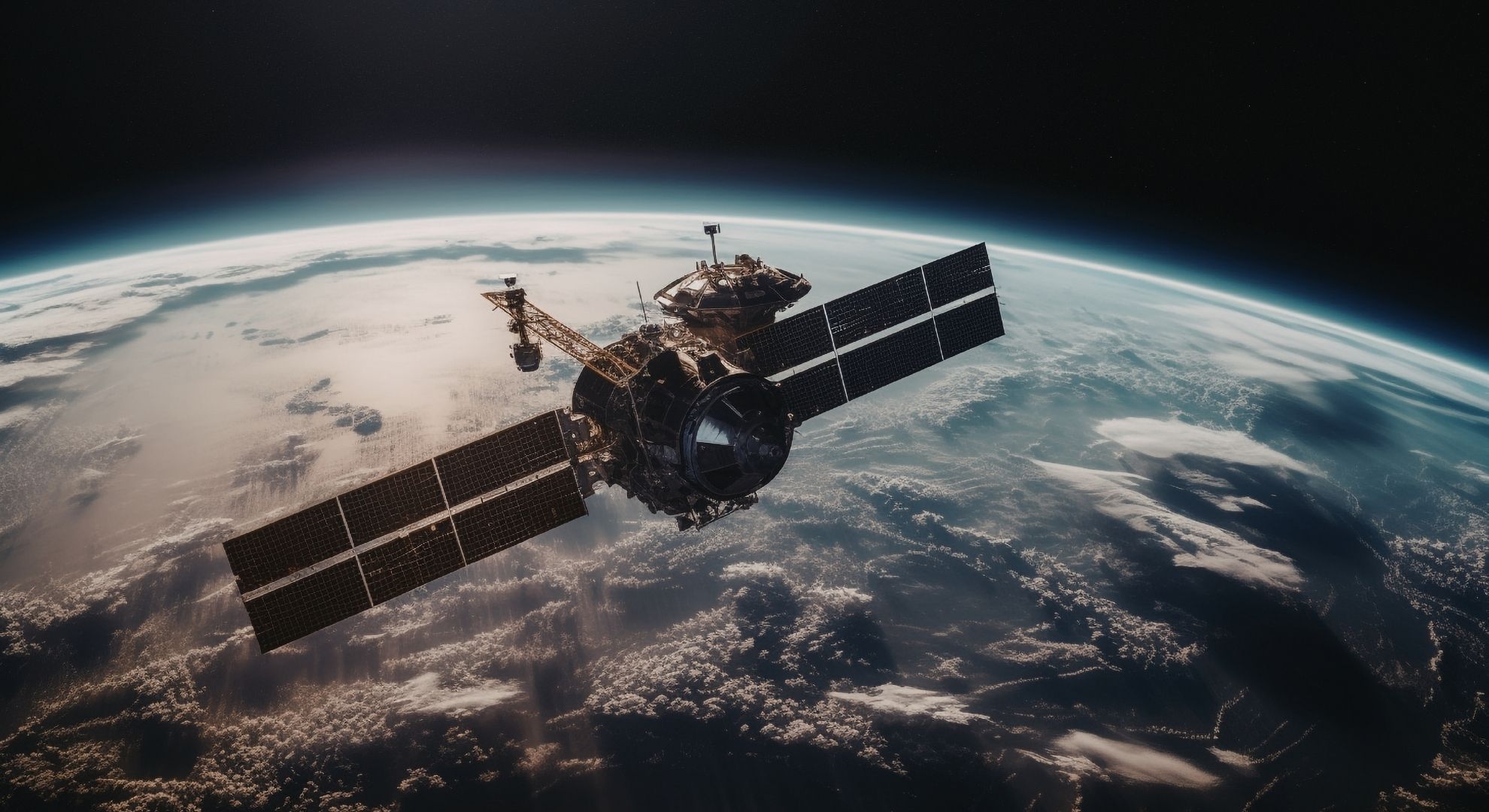
Whispers from the Pacific hint at something unusual: commercial satellite passes have captured patterns that look less like natural geology and more like design. Analysts point to a rugged, extinct volcanic island where excavation scars, discreet tunnels, and sea-facing apertures suggest a subsurface maritime facility. While independent verification remains limited, the imagery has stirred a rare blend of intrigue and alarm.
What makes this story resonate is not only the scale of the alleged project, but its placement under ancient lava flows that offer natural armor. The location implies access to deep water, a short run to blue-water lanes, and a shield against prying eyes. “If this is what it looks like, it’s a masterclass in concealment and strategic positioning,” said one Asia-Pacific defense analyst, speaking on background.
What the satellites seem to show
Across months of imagery, teams tracking the site have flagged shifts in terrain texture, unusual heat signatures, and earthworks that correspond with underground routing. On the seaward side, narrow channels cut through old volcanic rock, terminating at what appear to be cavernous mouths for vessels to slip in and out.
Synthetic-aperture radar has revealed geometric discontinuities beneath otherwise uniform basalt, the kind of regularity that screams man-made. Dredging plumes trace discreet approaches, while prefabricated sections on the shore hint at modular, rapidly installed infrastructure.
Geology as camouflage
Basaltic ridges offer hardness against bombardment and excellent acoustic damping, two prime qualities for shielding submarines. Porous vents and lava tubes can be repurposed as airflows, tucking ventilation and exhaust into the island’s natural capillaries. “Volcanic architecture is an old friend to tunnel engineers,” noted a retired civil geologist, who called the site’s rock “strong but forgiving.”
Building beneath an extinct cone adds geophysical cover, but it brings severe engineering demands: water ingress, seismic stability, and managing salt-laden corrosion. That, in turn, implies sophisticated pumps, redundant power, and high-end tunnel-boring equipment likely shipped in piecemeal under commercial labels.
A play for reach and resilience
For a navy chasing stealth, a buried berth promises survivability and faster turnarounds in contested waters. Boats can replenish, rearm, and depart into depth with minimal exposure to orbital or airborne reconnaissance. If the facility supports nuclear-powered attack boats or ballistic-missile submarines, it could underpin a more credible second-strike posture and expand patrol arcs.
Strategically, the location compresses time and distance to key choke points while complicating adversary tracking. A forward hideaway shifts the balance from predictable coastal hubs to a distributed footprint that’s harder to map and target. “It reduces the tells that cue hunters to a boat’s next move,” said a former submarine officer, cautioning that any operational payoff depends on disciplined emissions control.
Signals, noise, and skepticism
Not everyone is convinced. Some experts warn that parts of the pattern could match dual-use mining, storm-hardening projects, or even staged deception to snare OSINT watchers. “Satellites can suggest; they don’t swear,” one imagery specialist argued, urging patience until corroborating evidence emerges.
China has previously tunneled hardened pens into coastal cliffs, so the concept is hardly novel. What’s different here is the island’s isolation, the scope of subterranean work, and the apparent integration with undersea approaches. Still, without maritime patrol fixes, acoustic captures, or on-the-ground photography, strong claims remain provisional.
How the gameboard could shift
If confirmed, a volcanic redoubt would complicate surveillance and force adversaries to rethink search patterns. Persistent radar constellations, low-frequency acoustic nets, and uncrewed undersea vehicles would become even more central to maritime situational awareness. It would also press regional partners to share cues faster and align patrols across wider seams.
Escalation risks are real. Hardened sanctuaries encourage bastion tactics, which often invite perimeter tests and counter-infiltration plays. The result can be a tighter spiral of probes, denials, and ambiguous close encounters near sensitive zones. Managing that pressure will require crisp communications and clear redlines on all sides.
What to watch in the months ahead
Expect more commercial tasking, broader multi-sensor fusions, and analytic contests over what each new pixel means. Look for construction tempo shifts, additional vent stacks, and any pattern of “dark” logistics runs that skip standard AIS tracks. Above all, watch whether patrol rhythms in the region subtly change, a telltale that navies are already adjusting to a bunker beneath ancient stone.
Until verified by multiple channels, the volcanic base remains an assessment, not a settled fact. Yet the possibility alone is reshaping assumptions, reminding strategists that the ocean’s most decisive moves often begin where rock, secrecy, and patience come tightly fused.
