
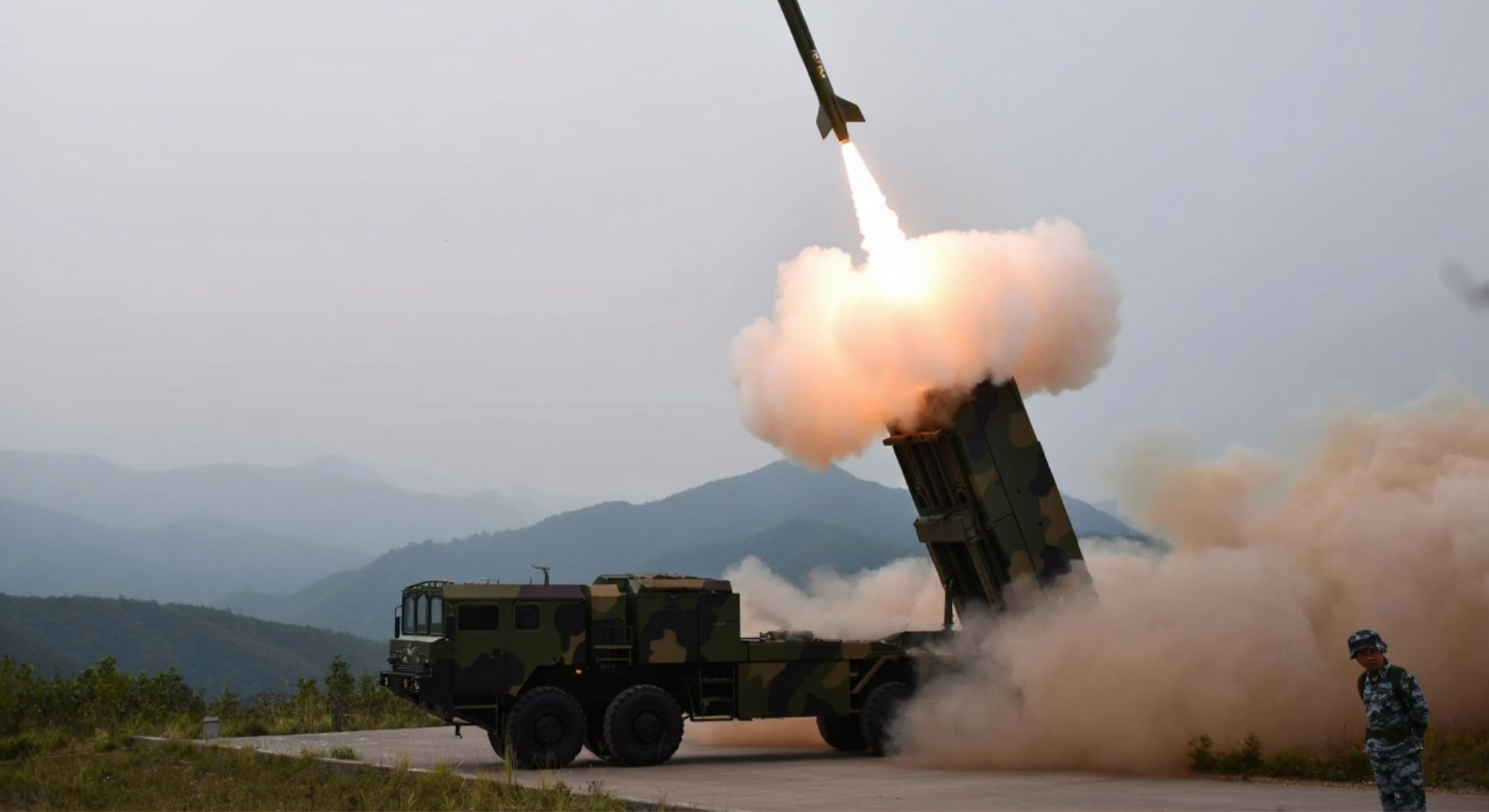
Beijing has unveiled a new hypersonic missile system, presenting it as a capability that outpaces any existing American defenses. While the precise specifications remain opaque, the message is unmistakable: a faster, smarter, and more elusive weapon meant to complicate Western planning. “This isn’t about speed alone,” said one Asia-Pacific analyst. “It’s about compressing time, expanding options, and injecting uncertainty into every response.”
What Beijing says it has built
State media showcased a maneuverable, boost-glide vehicle that separates after launch and skims the upper atmosphere. The platform reportedly sustains extreme velocities while jinking laterally to frustrate predictive tracking. Officials hinted at modular payloads, longer reach, and a refined guidance stack that thrives in contested environments. “It’s designed to be unreadable until it’s unavoidable,” claimed a defense commentator in Beijing’s nightly broadcast.
Why this matters for deterrence
Hypersonic systems shift the calculus by shrinking warning timelines and creating ambiguity over targets, trajectories, and intent. The weapon’s maneuver space undermines legacy assumptions baked into Cold War–era defenses. Regional actors suddenly face tighter windows for decision-making, elevating the risk of misread signals and hurried moves. “Deterrence is a conversation, and China just changed its tone,” noted a senior Asian diplomat.
How hypersonic glide breaks traditional defense logic
Conventional missile defense anticipates arcs, not agile, atmosphere-hugging profiles. Glide vehicles fly lower than ballistic missiles, often beneath long-range radar horizons, while maneuvering to scramble fire-control solutions. Their intense heat and plasma effects can degrade certain seeker and datalink modes, further complicating midcourse intercepts. The net result is fewer clean shots, less certainty, and narrower margins for countermeasure timing.
The claim of “no shield” and what that really means
Beijing’s assertion that no American system can intercept the weapon is part technical briefing, part strategic signal. U.S. architectures like GMD and Aegis were tuned for predictable ballistic profiles, not fully maneuvering glide threats. Yet Washington is fielding new layers: space-based tracking sensors, upgraded shipboard radars, and a Glide Phase Interceptor to strike during the weapon’s most vulnerable phase. “You can’t hit what you can’t track,” said a former Pentagon official, “but the tracking problem is exactly where investment is surging.”
What makes this system different
- Reported boost-glide design with cross-range maneuverability, shrinking defender reaction time and complicating intercept geometry.
Signals to the region and beyond
For U.S. allies, the reveal sharpens debates over missile defense, dispersal, and resilience. Japan is accelerating layered air and missile defense procurements, while Australia weighs AUKUS-enabled technologies to bolster sensing and strike. India will study the envelope to calibrate its own deterrent posture, and Russia will quietly parse performance hints for comparative advantage. The Gulf, too, may chase better high-altitude sensors and rapid-reaction interceptors to hedge against future copies.
Technology, tactics, and the cat-and-mouse ahead
The offense–defense cycle is inherently iterative, and hypersonics are no exception. Expect more decoys, multi-phenomenology sensors, and cooperative engagement networks that fuse space, air, and surface tracks. Expect also new command-and-control doctrines designed to compress kill chains without fueling accidental escalation. “Speed without control is danger,” warned a European air-defense planner. “The next race is really about better orchestration, not just bigger boosters.”
What the U.S. is likely to do next
Washington will accelerate space-based infrared constellations, refine over-the-horizon radar, and push the Navy’s Glide Phase Interceptor toward operational tests. The Army and Navy will pursue long-range, conventional prompt strike options to restore deterrence symmetry. Expect more allied data-sharing agreements, prepositioned sensors, and exercises that stress theater-level coordination under compressed timelines. Money will flow toward resilient networks and hardened logistics that keep ships and launchers fighting after a first salvo.
The fog around performance—and why it matters
Much remains unverified: test conditions, countermeasure performance, and production capacity all determine true battlefield effect. A single dazzling trial does not equal repeatable, deployable power at scale and under electronic duress. Savvy planners will demand telemetry, frequency agility, and endgame lethality data before rewriting doctrine. Still, perception alone can move policy, and perception is exactly what this unveiling seeks to shape.
Bottom line
The debut is both a technical claim and a strategic message aimed at unsettling comfortable assumptions. Even if “no shield” proves more slogan than settled science, the pressure on U.S. and allied defenses is real. In the near term, the balance turns on sensing, software, and the ability to make faster, better decisions under stress. In the longer term, it hinges on whether defenders can stretch the fight back into the glide phase—and keep it there long enough to matter.
