Crusader Imagery Meets Humanitarian Security
In Gaza’s crowded aid corridors, a private security footprint has drawn unusual attention. Members of the U.S.-based Infidels Motorcycle Club, who brand themselves modern “Crusaders,” have been hired by the contractor UGS to guard distribution hubs created with backing from Israeli and U.S. authorities. Reporting by BBC News, relayed by Le Courrier International, places several club figures in leadership roles at these sensitive sites.
Short bios of the men feature club aliases like “Taz,” “J-Rod,” “Saint,” and “A-Tracker,” now tied to operations for the Gaza Humanitarian Foundation. The positions span team command, site security, and logistics, with daily pay reportedly between €835 and €1,345 depending on the post. The arrangement fuses humanitarian delivery with contractors who embrace overtly militarized symbols.
Who the Infidels Are
Founded by Iraq War veterans in 2006, the Infidels MC mixes biker culture with right-wing politics. Club insignia highlight a Crusader cross and the number 1095, referencing the launch year of the First Crusade. Social posts documented by BBC News describe anti-Muslim rhetoric and occasional white-supremacist touchstones.
The club disputes that characterization on its public page. Leaders say they oppose “radical jihadism,” support religious freedom, and have worked with Muslim partners at home and abroad. They even claim some members are Muslim, while critics counter that the overall aesthetic is unavoidably hostile.
Inside the Gaza Detail
According to BBC News, Taz reportedly led UGS teams in Gaza, while J-Rod oversaw logistics. Saint managed security at one distribution center, and A-Tracker led a team at another site. The work involves perimeter control, queue management, and convoy escorts, all within an enclave where crowds, scarcity, and fear can turn volatile in minutes.
Contractors emphasize procedural discipline, yet their presence communicates power through uniforms, patches, and posture. In a landscape defined by airstrikes, militant activity, and desperate civilians, even the symbolism on a sleeve can alter crowd dynamics.
Escalation Fears and Accountability Questions
Civil rights advocates and aid experts warn that Crusader imagery in a Muslim-majority warzone risks provocation. The deputy director of the Council on American-Islamic Relations, Edward Ahmed Mitchell, drew a stark analogy to underscore the choice’s perceived insensitivity. His criticism zooms in on an optics problem that can morph into a security problem.
“Delegating a volatile front-line relief task to a group flaunting Crusader symbols is a match near a powder keg,” said one humanitarian security analyst. “The mission is to de-escalate, and the brand here does the opposite by design.”
The Human Cost at Aid Lines
United Nations figures cited by BBC News report that at least 1,135 Palestinians were killed near the four GHF aid centers from May to early September. The deaths include women and children, underscoring the lethal volatility around distribution points. Exact responsibility for specific incidents remains contested amid the fog of war.
Aid operators argue that robust security is essential, while critics counter that the current mix fuels fear, chaos, and reactive force. In high-stakes queues, a gesture, a shove, or a gun raised at the ready can tip a crowd into panic.
Why Outsourcing Became the Default
U.S. and Israeli planners often turn to private contractors for agility, deniability, and specialized skills. Companies like UGS can surge personnel, set up protocols, and plug into multinational logistics with relative speed. Yet vetting, oversight, and rules of engagement become flashpoints when ideology and imagery spill into public view.
Humanitarian principles demand neutrality, impartiality, and independence. When contractors project a culture coded as anti-Muslim or militaristic, the perception of neutrality erodes at first glance. In Gaza, perception quickly bleeds into reality.
Symbols, Stories, and the Street
On the street, crowded lines read uniforms as statements. A Crusader cross or “1095” can echo centuries-old violence, regardless of a guard’s stated intentions. The gap between a Facebook disclaimer and a mother waiting for flour can be measured in heartbeats and hard edges.
Even well-intended crowd control can feel like domination. Humanitarian security works best when it is discreet, culturally literate, and perceived as focused solely on protecting aid access. Every patch, phrase, and posture either builds or breaks that fragile trust.
At a Glance
- Key personnel reportedly include Taz, J-Rod, Saint, and A-Tracker, all tied to leadership roles in site security.
- Club symbols feature the Crusader cross and the number 1095, emblematic of First Crusade imagery.
- Daily pay reported between €835 and €1,345, depending on role and site-level responsibility.
- UN-cited death toll near GHF distribution hubs: at least 1,135 Palestinians killed from May to early September.
- BBC News and Le Courrier International provided principal reporting and aggregated details.
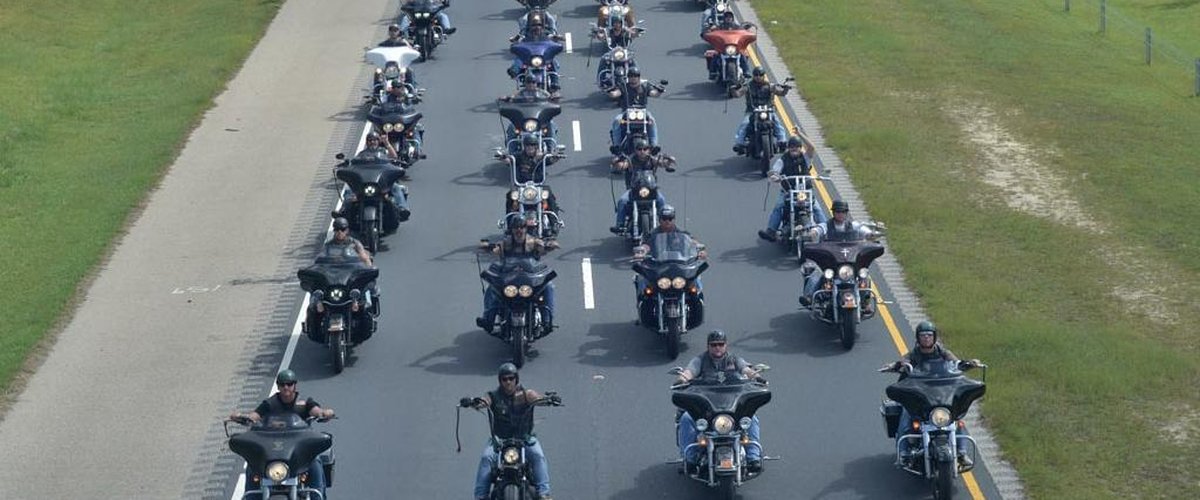
Image From the Original Coverage
What Comes Next
The question now is whether oversight can separate necessary security from counterproductive symbolism and ideology. Neutral training, cultural mediation, and transparent vetting could help dial down risks at the aid lines. Without changes, critics warn, even well-planned relief will fight an uphill battle for legitimacy and basic human safety.
In crisis response, the messenger is part of the message. In Gaza, that message must be care, not conquest—and every visible detail should reinforce that promise. Lives depend not only on the flow of flour, but on public confidence that the guardians of that flow are there to protect, not to provoke.
