
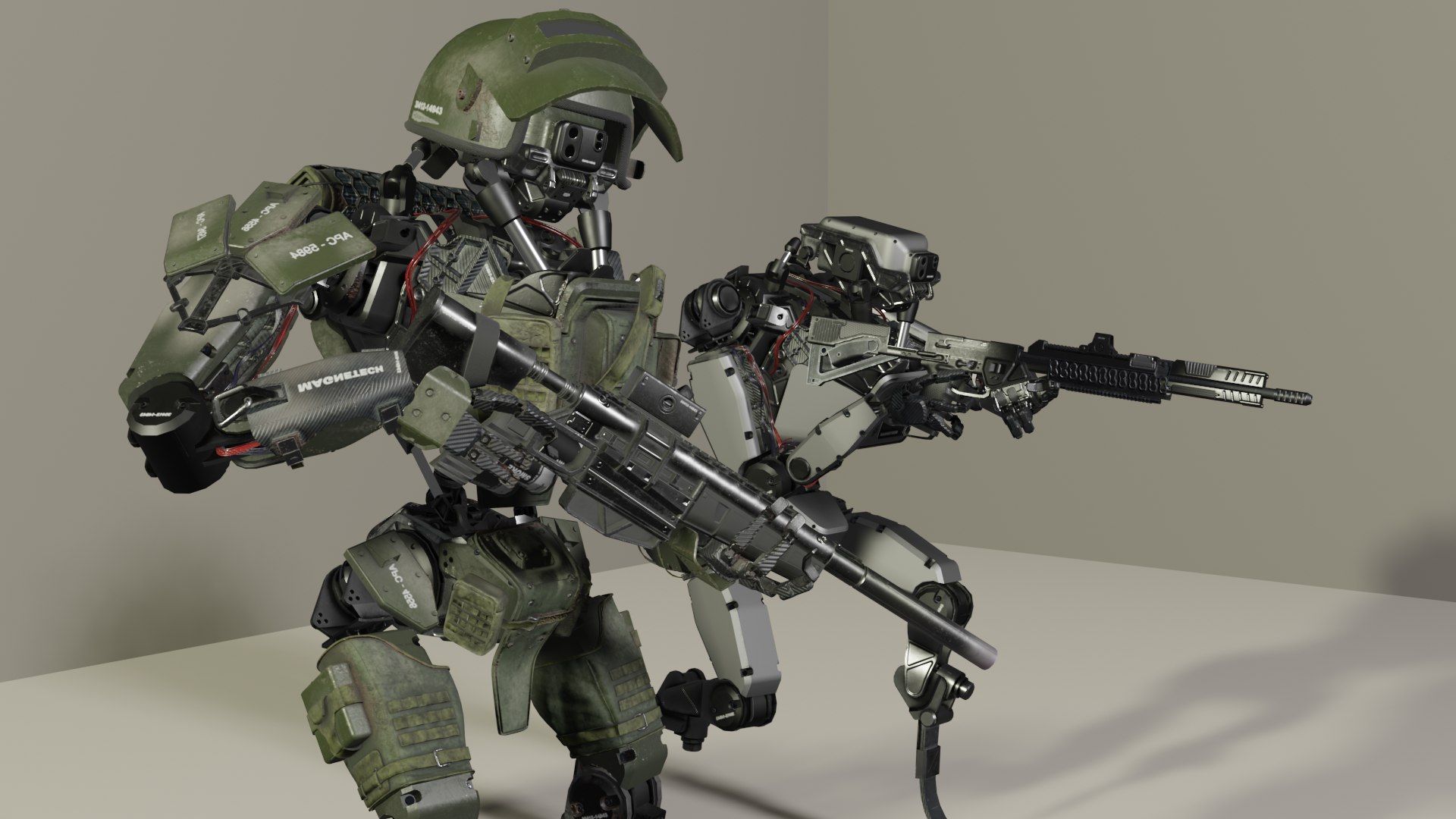
In addition to networking and digitalization, autonomy, artificial intelligence, and robotics have increasingly shaped warfare concepts in recent years. Almost all today’s multi-domain operation approaches incorporate unmanned systems into the command of operations across all domains and dimensions. Consequently, human-machine teaming is becoming more and more the responsibility of the individual dismounted soldier.
The current multidimensional warfare concepts envision interconnected combat formations: the individual soldiers, their land-, air-, sea-, cyber- and space-platforms as well as robots, drones and other unmanned systems operate together to master operations that run partly in parallel at different intensity levels across all domains and in all dimensions.
AI Shortens Kill Chains
On the digitized battlefield, the actors—horizontally, vertically and increasingly multinationally networked—whether human or machine—continuously feed information into the shared network, automatically or on demand. This is intended to provide all participants with a current situational picture at all times in order to shorten the sensor-to-effector chains or “kill chains”: enemy forces can be interrogated, classified and engaged more quickly. Artificial intelligence (AI) supports the unit commander in evaluating the flood of information and in preparing decisions.
For the dismounted soldier, the radios and command equipment of his soldier system form the interfaces for digital operations command. Platforms—even unmanned systems—act as “digital nodes” thanks to their digital radio equipment. Unmanned systems (abbreviated “UxS” = Unmanned/Uncrewed System; the “x” is replaced by the respective dimension or domain) can be operated by the dismounted soldier via remote controls or ground control stations. Increasingly, however, this can also be done through the communications and command equipment of the soldier system.
In current and anticipated projects, this aspect will come more to the foreground. The PESCO project “Next Generation Dismounted Soldier System (NGSS)” explicitly provides that, among other things, through the “integration of advanced technologies such as Unmanned Aerial Systems (UAS), Unmanned Ground Systems (UGS) and remotely operated autonomous systems, Cyber Electro Magnetic Activities (CEMA) measures, AI and Augmented Reality (AR) solutions, Mesh-Mobile ad-hoc networks (Mesh-MANET) and satellite communication technologies” the “combat capabilities and the effectiveness of soldiers in high-intensity combat scenarios” should be improved, “especially by reducing cognitive and physical burden.”
 Sign up easily for a Digital Access to immediately benefit from all S&T Digital advantages. To Digital Access
Digital Monthly Pass
for €2.50 / month
Order
Digital Annual Pass
for €15 / 1 year
Order
Digital Yearly Subscription
for €12 / 1 year
Order

Enjoy premium content and other benefits from Soldat & Technik Digital:
- Access to all premium articles from Soldat & Technik.
- Easy payment via PayPal, direct debit, or credit card
- The subscription can be canceled at any time
- The monthly and annual passes do not renew automatically.
